Phone:
(701)814-6992
Physical address:
6296 Donnelly Plaza
Ratkeville, Bahamas.

Phone:
(701)814-6992
Physical address:
6296 Donnelly Plaza
Ratkeville, Bahamas.

Knowing when to DIY and when to call a licensed pro isn't just about skill level - here's how to make that call project by project.
A 2025 HomeAdvisor survey found that 37% of homeowners who attempted electrical work themselves ended up calling a licensed electrician to fix their mistakes, at double the original cost. The decision between DIY vs hiring a contractor isn’t just about saving money. It’s about understanding your skill level, recognizing safety boundaries, and knowing when a project crosses the line from weekend warrior territory into licensed professional required work.
Every home improvement project sits somewhere on a spectrum. On one end, you have truly DIY-safe tasks like painting walls or replacing cabinet hardware. On the other, you have jobs that legally require permits and licensed contractors, electrical panel upgrades, gas line work, structural modifications. The middle ground is where most homeowners struggle to decide.
This guide breaks down exactly when to tackle a project yourself and when to step back and call in the experts. You’ll get real cost breakdowns, safety boundaries, and honest assessments of what each approach actually involves.
Table of Contents
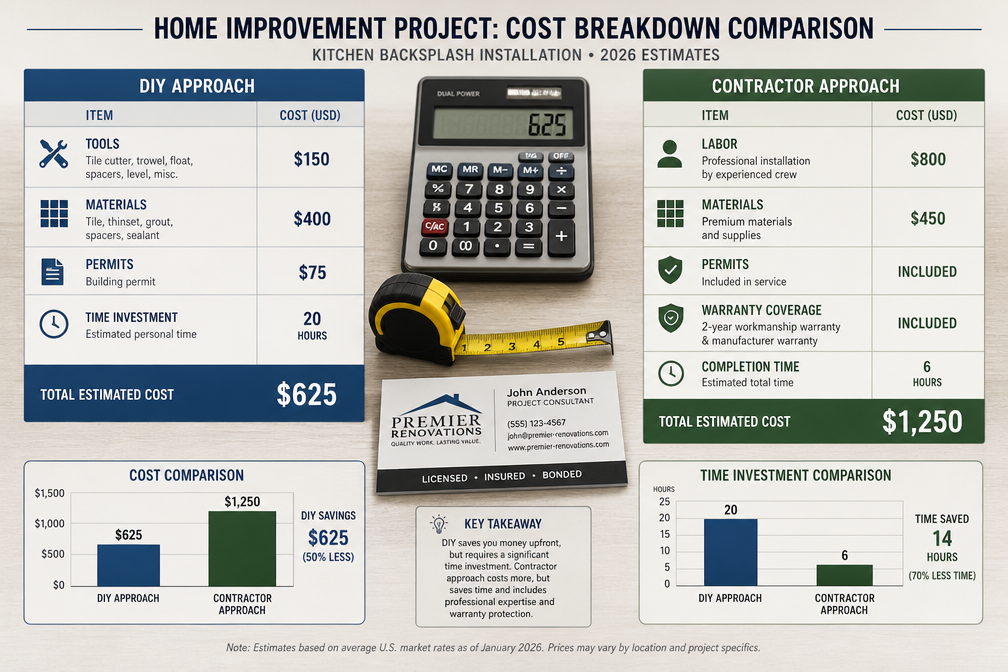
Before you start, understand that the sticker price difference between DIY and hiring a contractor tells only part of the story. A complete cost breakdown includes materials, tools, permits, your time, and the risk of mistakes.
DIY Cost Components:
Contractor Cost Components:
For example, replacing flooring in a 200-square-foot room breaks down like this in 2026:
DIY Approach:
Contractor Approach:
The DIY route saves $1,025-$1,350, but requires 16-20 hours of your time. If your time is worth $50/hour, the real savings shrink to $225-$350. Factor in the learning curve, potential mistakes, and physical demands, and the contractor option becomes more attractive for many homeowners.
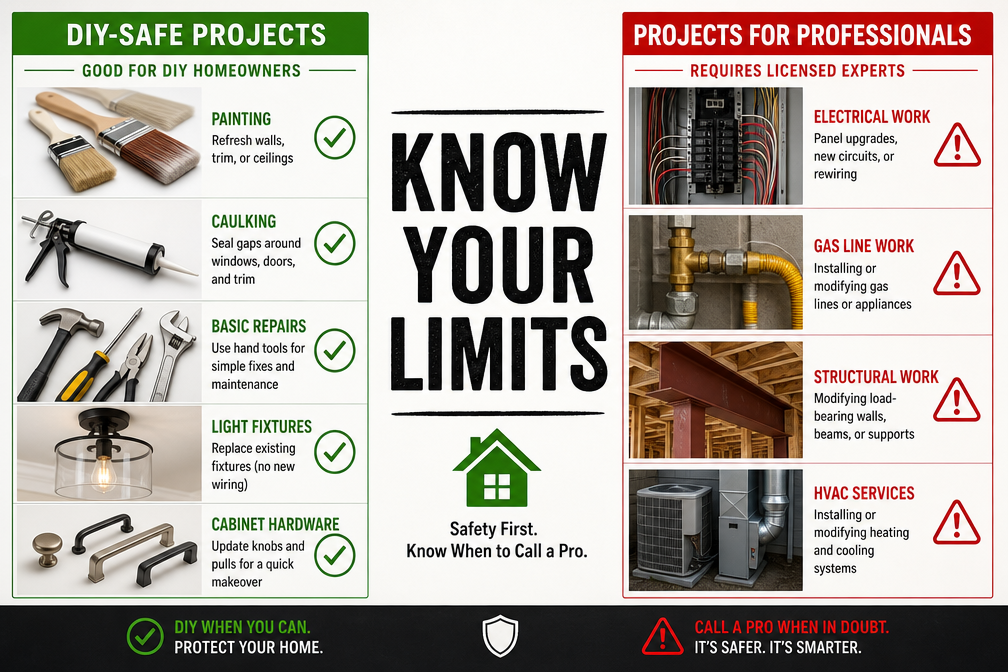
These projects carry minimal safety risk, don’t require permits in most jurisdictions, and use basic tools most homeowners can master quickly.
Painting and Surface Updates:
Painting interior walls, re-caulking a bathtub, or applying new wallpaper are classic DIY-safe projects. The worst-case scenario is cosmetic imperfection, not safety hazards.
Tool list: Paint brushes, rollers, painter’s tape, drop cloths, caulk gun, utility knife. Total investment: $50-$100 if starting from zero.
Common mistakes: Skipping surface prep, using cheap brushes, not allowing proper dry time between coats.
Basic Hardware and Fixture Swaps:
Replacing cabinet hardware, door handles, light switch plates, or curtain rods requires only basic hand tools and carries no electrical risk when you’re not touching wiring.
Simple Repairs:
Fixing squeaky floors and doors, patching drywall nail pops, adjusting door hinges, and fixing doors that won’t latch are all beginner-friendly repairs that build confidence.
Basic Plumbing Fixes:
Fixing a running toilet with replacement flappers and fill valves, unclogging drains with a plunger or snake, and swapping a bathroom faucet are DIY-safe because you’re working with shut-off valves and replaceable parts, not modifying supply lines.
Outdoor Projects:
Building a wooden privacy fence, repairing concrete driveway cracks, and servicing garage doors (lubrication and minor adjustments, not spring replacement) are manageable weekend projects.
These projects share common traits: they use hand tools or basic power tools, don’t require permits, involve no hidden systems (electrical, plumbing, gas, structural), and mistakes are fixable without major expense.
Some projects aren’t just difficult for DIYers, they’re dangerous, illegal without proper licensing, or will void your insurance coverage if done incorrectly.
Electrical Work Beyond Basic Fixtures:
Replacing a light fixture where you’re simply disconnecting and reconnecting existing wires to a new fixture is DIY-safe if you turn off the breaker. But anything involving your electrical panel, adding new circuits, or modifying wiring inside walls requires a licensed electrician.
Licensed professional required:
Why: Incorrect electrical work causes house fires, electrocution, and insurance claim denials. Most jurisdictions require permits and inspections for electrical work, which means a licensed electrician must do the work.
Gas Line Work:
Never attempt DIY work on natural gas or propane lines. Gas leaks cause explosions and carbon monoxide poisoning.
Licensed professional required:
Structural Modifications:
Removing or modifying walls, beams, or load-bearing elements requires structural engineering calculations and permits.
Licensed professional required:
Major Plumbing:
While fixing a running toilet is DIY-safe, major plumbing modifications require licensed plumbers.
Licensed professional required:
Roof Work:
Minor roof repairs like replacing a few shingles might be DIY-safe if you’re comfortable with heights and safety equipment, but full roof replacement, structural repairs, or work on steep pitches requires professionals.
HVAC Installation:
Replacing filters and cleaning vents is DIY-safe. Installing or repairing HVAC systems requires EPA certification for refrigerant handling and specialized tools.
Some projects fall into gray areas where the decision between DIY vs hiring a contractor depends on your honest assessment of your skills, available time, and risk tolerance.
Intermediate DIY Projects:
These require more skill, specialized tools, and significant time investment, but are achievable for homeowners willing to learn:
Before you start these projects, honestly assess:
Do you have the right tools? Tile saws, pneumatic nailers, and laser levels aren’t cheap. Rental costs add up quickly.
Do you have realistic time estimates? Professionals complete projects faster because they’ve done them hundreds of times. Your first tile job will take 3-4 times longer than you expect.
What’s your mistake tolerance? Incorrectly installed tile or flooring means buying materials twice and starting over.
Does the project require a permit? If yes, you’ll need inspections, which means your work must meet code. Consider whether you’re confident enough for that scrutiny.
When to Use a Hybrid Approach:
Many homeowners save money by handling demolition and prep work themselves, then hiring professionals for installation.
For example, on a bathroom remodel:
This approach saves 20-30% compared to full contractor pricing while maintaining safety and code compliance on critical systems.
Use this framework to decide whether to DIY or hire a contractor for your specific project:
Step 1: Identify Safety and Legal Requirements
Ask these questions first:
If you answered yes to any of these, lean toward hiring a professional.
Step 2: Calculate True Costs
Create a realistic budget:
Compare this to contractor quotes. Get at least three quotes for any major project.
Step 3: Assess Your Skill Level Honestly
Rate yourself on this scale:
Match your skill level to the project complexity. Don’t jump from beginner to advanced without intermediate experience.
Step 4: Consider Timeline and Disruption
How long can you tolerate the disruption? A bathroom remodel that takes a contractor one week might take you four weekends, meaning a month without a functional bathroom.
Step 5: Evaluate Long-Term Impact
Some projects affect home value and future sale:
If the project significantly affects home value, professional work often pays for itself in resale value and buyer confidence.
Underestimating Project Complexity:
The most common mistake is watching a 10-minute YouTube video and assuming you can replicate professional results. First-time DIYers often wish they knew that videos skip the problem-solving, mistakes, and time-consuming details.
Skipping Permits:
Unpermitted work creates legal and financial problems:
Buying Cheap Tools for One-Time Use:
A $40 circular saw will frustrate you and produce poor results. Either buy quality tools you’ll use repeatedly or rent professional-grade equipment.
Not Having a Backup Plan:
Start projects when you have time to finish them. Don’t begin demolishing your only bathroom on Thursday if you work all weekend. Have a contingency plan if the project takes longer than expected.
Ignoring Your Physical Limitations:
Roofing, demolition, and concrete work are physically demanding. Be honest about your strength, stamina, and comfort with heights or confined spaces.
Sometimes hiring a professional makes sense even when you could technically do the work yourself:
Time Constraints:
If you work 60-hour weeks, spending your only free time on home repairs might not be worth the savings. Your time has value beyond hourly wages, consider rest, family time, and stress levels.
Physical Limitations:
Injuries, age, or health conditions might make physically demanding projects risky. There’s no shame in hiring help for tasks that could hurt you.
High-Stakes Projects:
First impressions matter. If you’re preparing your home for sale, professional painting, landscaping, and repairs often deliver better ROI than DIY attempts.
Learning Curve Too Steep:
Some projects require skills that take years to develop. Professional tile setters, finish carpenters, and painters produce noticeably better results than first-time DIYers.
Specialized Equipment:
If a project requires tools you’ll never use again and rental costs approach contractor pricing, hiring out makes financial sense.
If you want to tackle more complex projects over time, build skills progressively rather than jumping into advanced work.
Beginner Projects to Build Confidence:
Start with projects where mistakes are easily corrected:
Intermediate Projects to Develop Skills:
Once you’re comfortable with basic tools:
Advanced Projects After Proven Success:
Only after multiple successful intermediate projects:
Take classes at home improvement stores, watch detailed tutorials, and don’t hesitate to consult with professionals even if you’re doing the work yourself. Many contractors will answer questions or review your plans for a small consultation fee.
How do I know if my project requires a permit?
Contact your local building department with project details. Generally, permits are required for electrical work, plumbing modifications, structural changes, HVAC installation, and projects that change your home’s footprint. Cosmetic updates like painting, flooring, and cabinet installation typically don’t require permits.
Can I do part of a project myself and hire a contractor for the rest?
Yes, hybrid approaches work well. Handle demolition, painting, and prep work yourself, then hire professionals for specialized installation. Discuss this upfront with contractors, some prefer complete control of projects, while others welcome homeowner participation to reduce costs.
What happens if I do unpermitted work myself?
Unpermitted work can result in fines, insurance claim denials, and complications when selling your home. If discovered during a home inspection, buyers may demand corrections, price reductions, or walk away from the sale. Some jurisdictions require you to open walls to verify work meets code before issuing retroactive permits.
How much can I realistically save by doing projects myself?
Labor typically represents 40-60% of contractor quotes. However, your actual savings depend on your efficiency, whether you already own necessary tools, and whether you make costly mistakes. First-time DIYers often save 20-30% after accounting for all costs and their time value.
Should I get insurance if I’m doing major DIY projects?
Your homeowner’s insurance covers you while working on your own home, but verify your policy details. If you hire unlicensed helpers, you may need additional coverage. Contractors carry liability and workers’ compensation insurance, one reason their rates are higher than pure material and labor costs.
When should I call a professional to fix my DIY mistakes?
Call immediately if you’ve created safety hazards (exposed wiring, gas leaks, structural instability) or if continuing will make the problem worse. For cosmetic mistakes, assess whether you can correct them yourself or if professional help will save time and materials. Don’t let pride prevent you from getting help, professionals fix DIY mistakes regularly and won’t judge you.
The decision between DIY vs hiring a contractor comes down to three factors: safety, skill, and value. Always hire licensed professionals for electrical work beyond basic fixtures, gas line work, structural modifications, and major plumbing. These aren’t areas where you should learn by doing, the risks are too high.
For genuinely DIY-safe projects like painting, basic repairs, and cosmetic updates, tackle them yourself to build skills and save money. The middle ground, flooring installation, tiling, deck building, requires honest assessment of your abilities, available time, and risk tolerance.
Before you start any project, create a realistic cost breakdown including materials, tools, permits, and your time. Compare this to contractor quotes. Factor in the long-term impact on home value, especially for kitchen and bathroom work where professional results matter to future buyers.
Start with beginner-friendly projects to build confidence, invest in quality tools you’ll use repeatedly, and don’t skip permits when required. When in doubt, consult with professionals, even a paid consultation can save you from costly mistakes.
The best DIYers know their limits. They tackle projects within their skill level, call in experts when safety or code compliance is at stake, and continuously build their abilities through progressive learning. That approach keeps you safe, protects your home’s value, and ensures you’re genuinely saving money rather than creating expensive problems to fix later.
