Phone:
(701)814-6992
Physical address:
6296 Donnelly Plaza
Ratkeville, Bahamas.

Phone:
(701)814-6992
Physical address:
6296 Donnelly Plaza
Ratkeville, Bahamas.
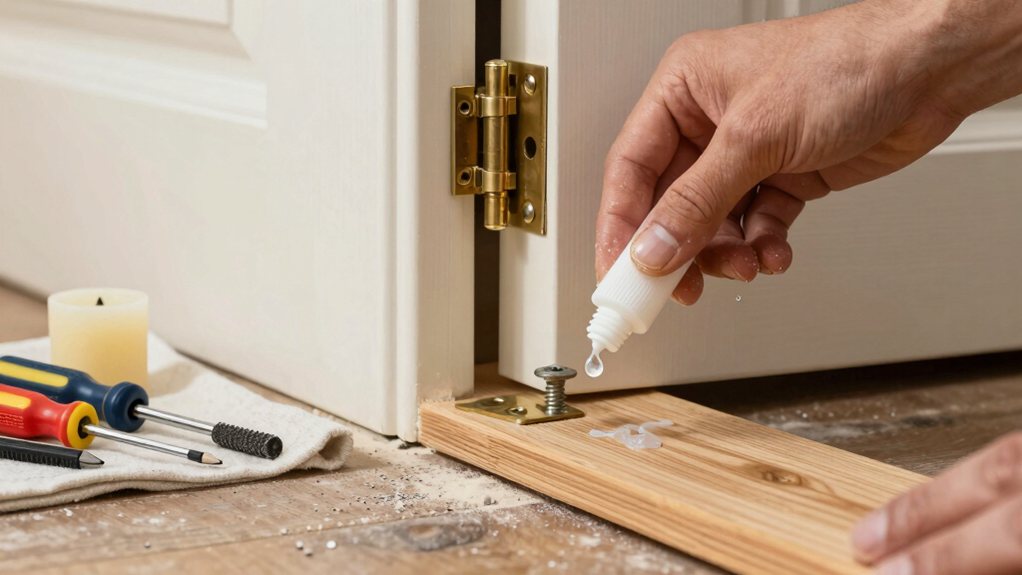
Wondering how to silence those squeaky floors, doors, and hinges? Discover these simple, effective fixes that...
First, find the squeak by walking slowly or swinging the door while someone listens. For a squeaky floorboard, drive a long screw through the carpet into the floor joist. Silence a door hinge by cleaning it and applying a drop of lightweight oil or dry graphite powder. Avoid thick grease, which attracts dirt. Keep a simple repair kit handy, and you’ll handle any creak that comes back for more attention.
Table of Contents
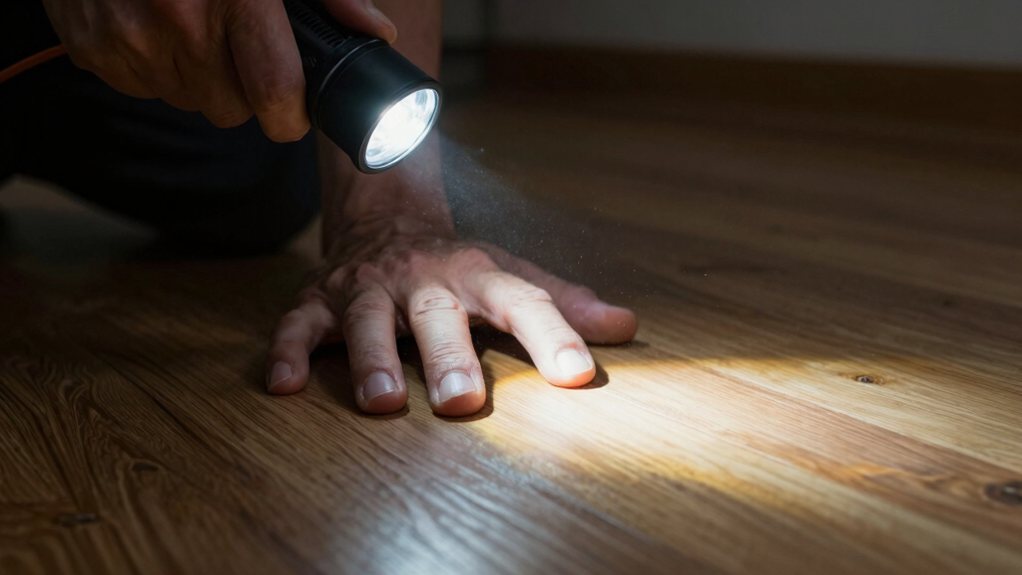
First, you’ve got to find that squeak—because let’s be honest, you can’t fix what you can’t find.
Finding the squeak is step one—after all, you can’t silence what you haven’t yet discovered.
Start a process of sound mapping by simply walking slowly across the floor or swinging the door.
Pay close attention to where the noise is loudest.
Sometimes, a quiet night inspection works best, when the house is still and every creak shouts its location.
You’ll feel like a detective on a very specific, slightly silly case.
Have a friend help if you can; they can move the hinge or step on boards while you listen and pinpoint the exact spot.
This two-step hunt—you moving and you listening—solves half the battle before you even grab a tool.
If you discover structural issues, consider professional floor joist repair to ensure long-term stability.
Silencing that squeaky floorboard for good is easier than you think, and you won’t need a whole toolbox or a free weekend to do it. First, confirm the noisy board by walking nearby while a friend listens.
Your main weapon is a simple screw. Drive a long, thin screw at an angle through the carpet and into the floor joist below; this pulls the board down tight.
For gaps at the edge, gently tap in slender wood shims for extra support. This direct fix stops the rubbing that causes the sound. Think of it as a little preventive sealing against future squeaks. You’ll be amazed how one well-placed screw can bring blessed quiet, all in under ten minutes. Enjoy the silence. If you notice soft spots or water stains, have a professional inspect the subflooring to rule out rot or structural damage.
Ever heard a door that sounds like it’s auditioning for a haunted house?
You can silence that squeak fast with just two common household items. This quick fix is a great entry into soundproofing basics, and the materials are safe, making them perfect pet friendly options.
You’ll need:
First, wipe the hinge clean.
Then, apply a small amount of your chosen lubricant to the top of each hinge pin, letting it seep down. Work the door back and forth a few times to spread it. The squeak should vanish, restoring quiet without a trip to the hardware store. For longer-lasting results consider upgrading to a premium door hardware set, which offers durable hinges and smoother operation.
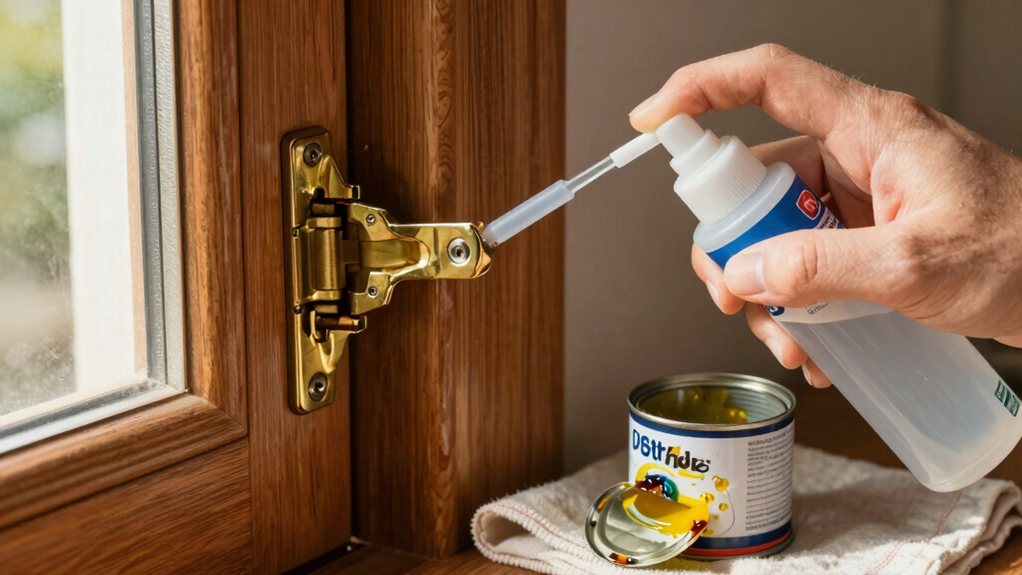
You’ll need the right lubricant to stop those noisy hinges, but it’s easy to pick the wrong one and make a mess.
A lightweight silicone spray or a drop of household oil usually does the trick without attracting dust and grime.
Just avoid using thick grease or cooking spray, as they’ll gunk everything up and attract dirt, making the problem worse later on.
For more complex alignment issues, consider hiring professional door frame installation services.
Picture that annoying squeak every time you open your kitchen cabinet door.
Choosing the correct lubricant is your secret weapon to restore peace.
You’ll want to keep in mind a quick viscosity comparison—thicker pastes are great for heavy-duty door hinges, while light sprays work for cabinet hinges.
Also, think about the environmental impact; some sprays are eco-friendlier than others.
Here’s a simple guide to get you started:
Avoid heavy grease or WD-40 for indoor hinges, as they can attract dust and gunk things up again.
If you’re comparing options, check product listings for smart door lock features to ensure compatibility with your existing hardware.
Now that you’ve got the good stuff, let’s talk about what *not* to use, because grabbing the wrong product can make a quiet fix turn into a sticky, dusty mess.
Avoid aerosol solvents like WD-40; they’re great for loosening rust but evaporate quickly, leaving your hinge dry and squeaky again in no time. They also attract grime. Steer clear of any acidic cleaners or harsh household sprays, as they can corrode metal and damage wood finishes over time.
It’s tempting to grab what’s under the sink, but that vinegar solution is for windows, not your hardwood floor. Remember, using the wrong lubricant can create more problems, so stick with the dedicated, dry, or oil-based options we discussed earlier. Also, when cleaning nearby floors, use pH-neutral formulas to avoid stripping finishes.
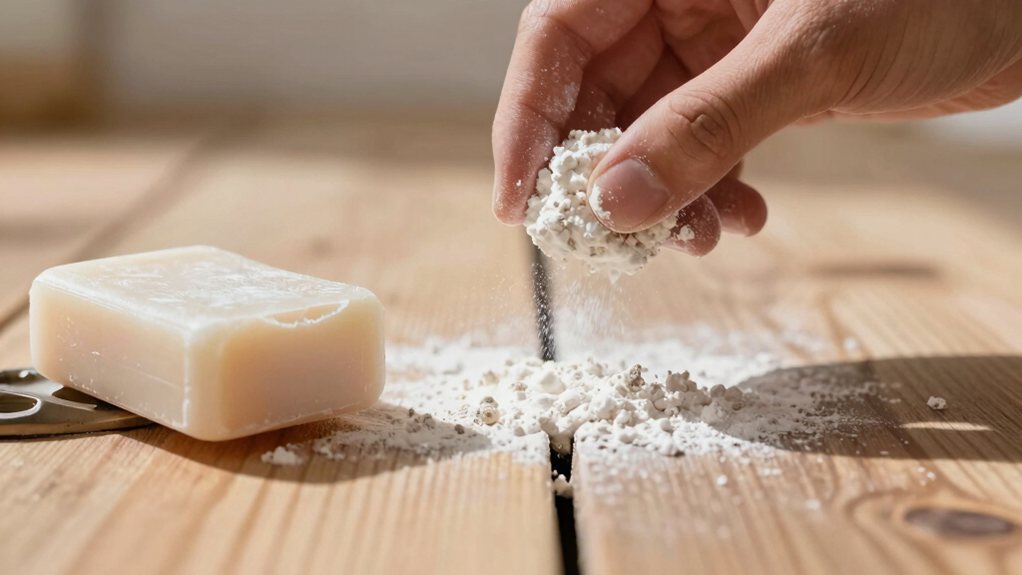
Sometimes you need a quick fix that doesn’t involve a liquid spray, and that’s when a dry lubricant like talcum powder or even a bit of bar soap can be your best friend.
These are perfect for situations where you want to avoid messy drips, like on a tight door hinge or a squeaky floorboard seam.
Just sprinkle or rub a small amount into the noisy spot, work it in gently, and you’ll often find the squeak vanishes without any fuss.
For renter-friendly, low-commitment updates elsewhere in the home, consider peel-and-stick options like peel-and-stick tiles which are forgiving and easy to install.
* Talcum Powder: Perfect for floorboards.
Just sprinkle it into the cracks and work it in by stepping on the plank a few times.
It’s super slippery and won’t attract dust.
These tidy tricks let you solve the squeak and get on with your day, no cleanup required. For long-term results, check your subfloor’s substrate flatness before relying on dry lubricants, since uneven boards can indicate underlying issues.
So, when exactly should you reach for that container of talcum powder or that trusty bar of soap instead of a can of oil? Dry lubricants are your perfect first line of defense in sensitive or temporary situations.
They’re ideal for historic homes where you want to avoid messy, permanent oil stains on precious original woodwork. For rental properties, they offer a landlord-friendly, non-damaging fix that won’t jeopardize your security deposit.
They’re also brilliant for quick, indoor fixes on door hinges or drawers where oil drips would ruin carpets or floors. Since they don’t attract grime like wet lubricants, they keep things cleaner.
Think of them as a neat, temporary whisper for a squeak, not a permanent shout.
Even if you’ve successfully silenced a noisy floorboard or hinge before, it’s frustrating when that familiar squeak decides to make an unwelcome comeback.
Don’t worry—this is common, and you can fix it again.
The return often points to underlying causes you can address.
A little persistent troubleshooting usually wins the battle against the squeak. Also check floor joists and subfloor fasteners, since wood expands and contracts with humidity and can reintroduce movement.
Assemble your own squeak-repair kit and you’ll be ready to tackle any annoying creak that pops up, turning frustration into a quick and satisfying fix.
Start with a solid parts inventory: wood screws of various lengths, finish nails, a small bottle of lubricating oil, powdered graphite for locks, and wood shims.
Don’t forget your safety gear—a decent pair of gloves and safety glasses are must-haves to protect your fingers and eyes from dust and sharp edges.
Toss in a few basic tools like a cordless drill, a hammer, and a putty knife.
Having everything in one toolbox means you won’t waste time searching; you’ll just grab your kit and restore the peace in minutes.
For added convenience, you can purchase a complete set of professional safety equipment from a professional safety gear kit listing.
So you’ve tackled those squeaks! With a few simple tools and some patience, you’ve turned your noisy home back into a peaceful haven. Remember, fixing the root cause is what gives you that lasting quiet. Keep your repair kit handy for any future chirps, and don’t be afraid to give a stubborn hinge another squirt of oil. Now, go enjoy the sound of silence—you’ve earned it!