Phone:
(701)814-6992
Physical address:
6296 Donnelly Plaza
Ratkeville, Bahamas.

Phone:
(701)814-6992
Physical address:
6296 Donnelly Plaza
Ratkeville, Bahamas.
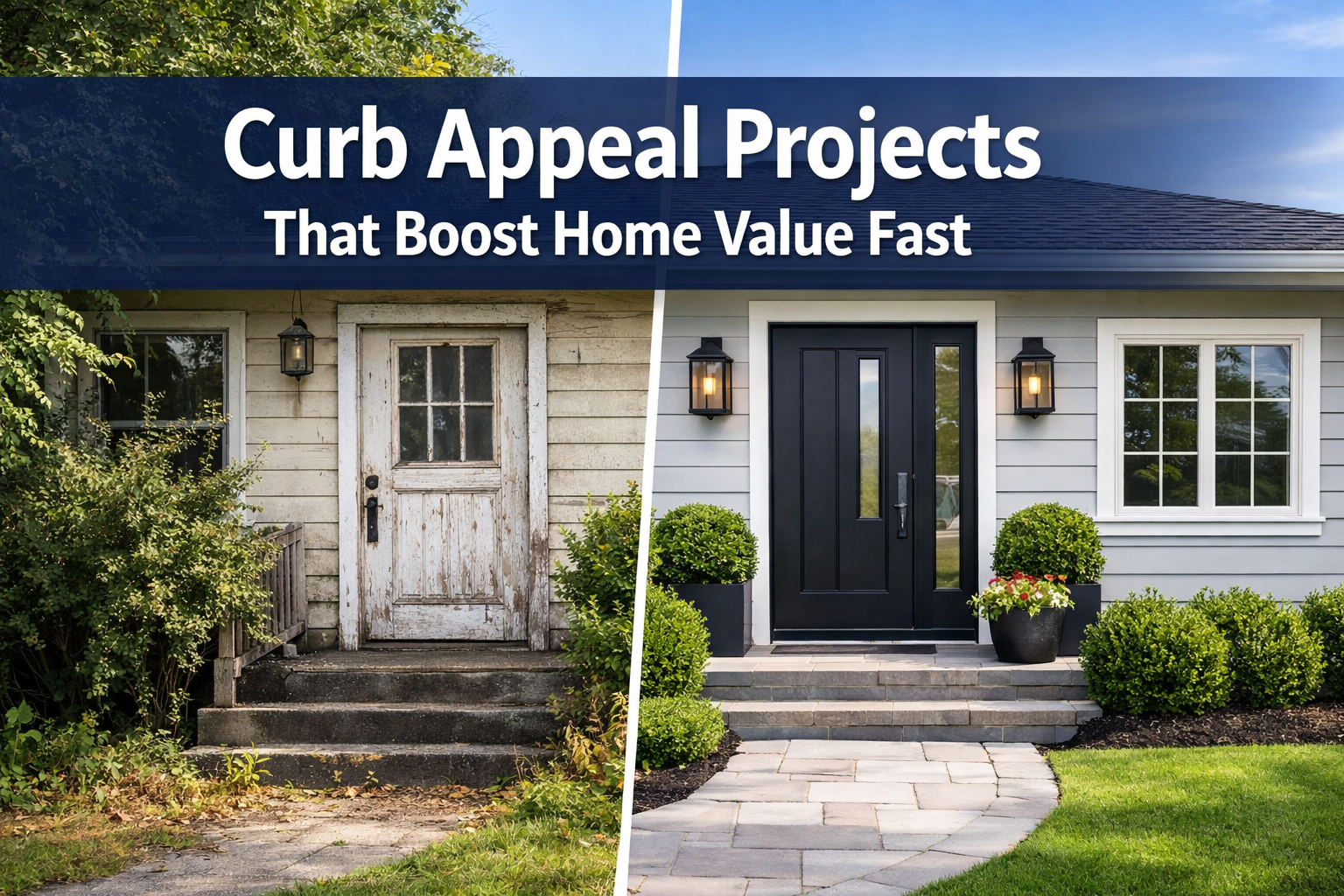
Curb appeal projects can boost home value fast without a full renovation budget - here's where to actually spend for the biggest visual impact.
Real estate agents report that homes with strong curb appeal sell for 7-14% more than comparable properties with neglected exteriors. That difference translates to $17,500 to $35,000 on a $250,000 home, serious money for projects you can often complete in a weekend. The best curb appeal projects home value boosters don’t require massive budgets or professional contractors. Many deliver impressive returns with basic tools, a free Saturday, and materials from your local home center.
This guide breaks down the highest-impact curb appeal projects home value improvements you can tackle yourself, with honest assessments of difficulty, real cost ranges, and clear boundaries between DIY-safe work and jobs that need licensed professionals.
Table of Contents
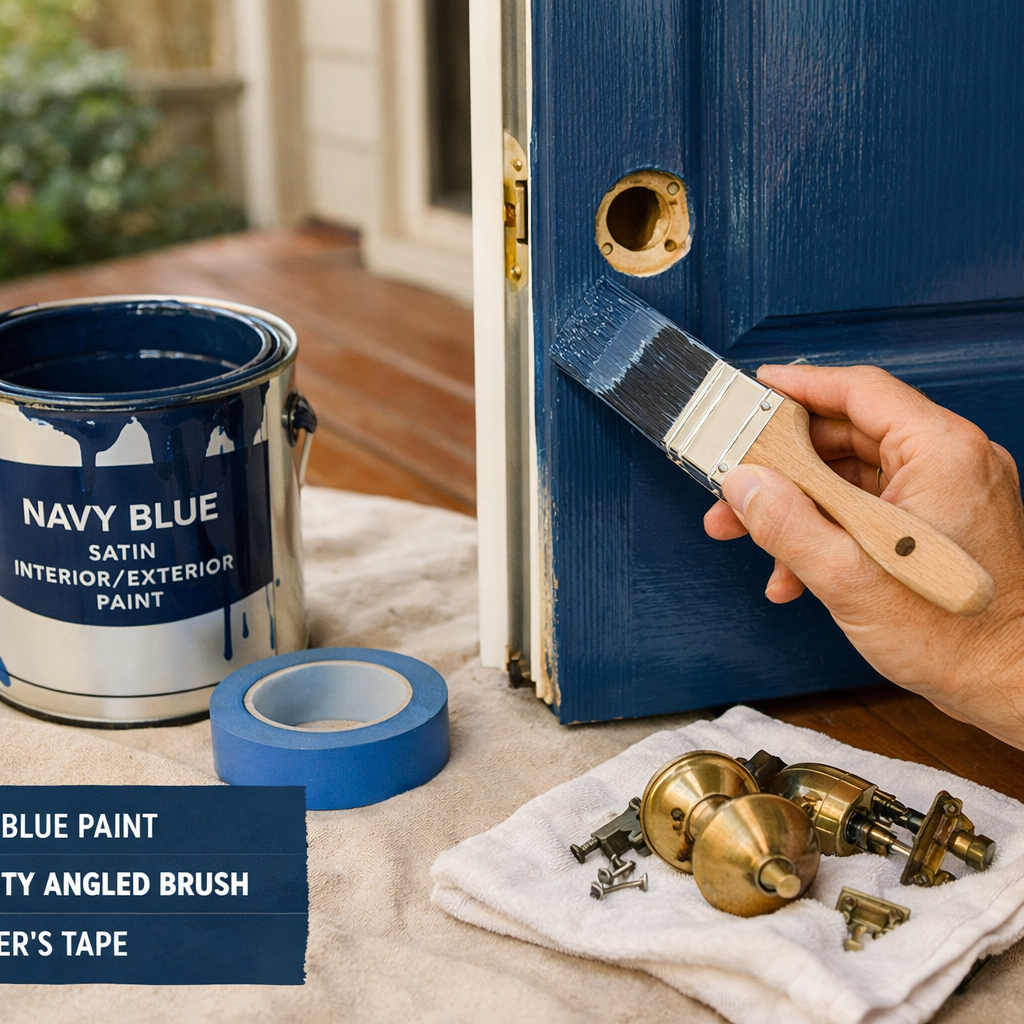
Your front door creates the focal point for your home’s exterior. A dated, worn, or poorly maintained door signals neglect to potential buyers and visitors. This single element influences first impressions more than almost any other exterior feature.
DIY-Safe Scope: Painting an existing door, replacing door hardware, installing a pre-hung door in an existing frame.
Licensed Professional Required: Structural modifications to door openings, installing new door frames that affect load-bearing walls, custom door fabrication.
Before you start, remove the door from its hinges and lay it flat on sawhorses. Working horizontally prevents drips and gives you better access to all surfaces.
Tool List:
Material List:
Step-by-Step Process:
Common Mistakes: Painting in direct sunlight causes lap marks and uneven drying. Skipping the sanding step leads to poor paint adhesion and peeling within months. Rushing the drying time between coats creates a tacky finish that attracts dirt.
Cost Breakdown:
Time Investment: 6-8 hours spread over two days (including drying time)
Pre-hung doors come with the frame already attached, making installation straightforward for anyone comfortable with basic carpentry. You’re essentially removing the old unit and installing a new one in the existing opening.
Additional Tools Needed:
Cost Breakdown:
Time Investment: 4-6 hours for first-time installers
For detailed guidance on door installation and common latch problems, check our guide on how to fix a door that won’t latch or close properly.
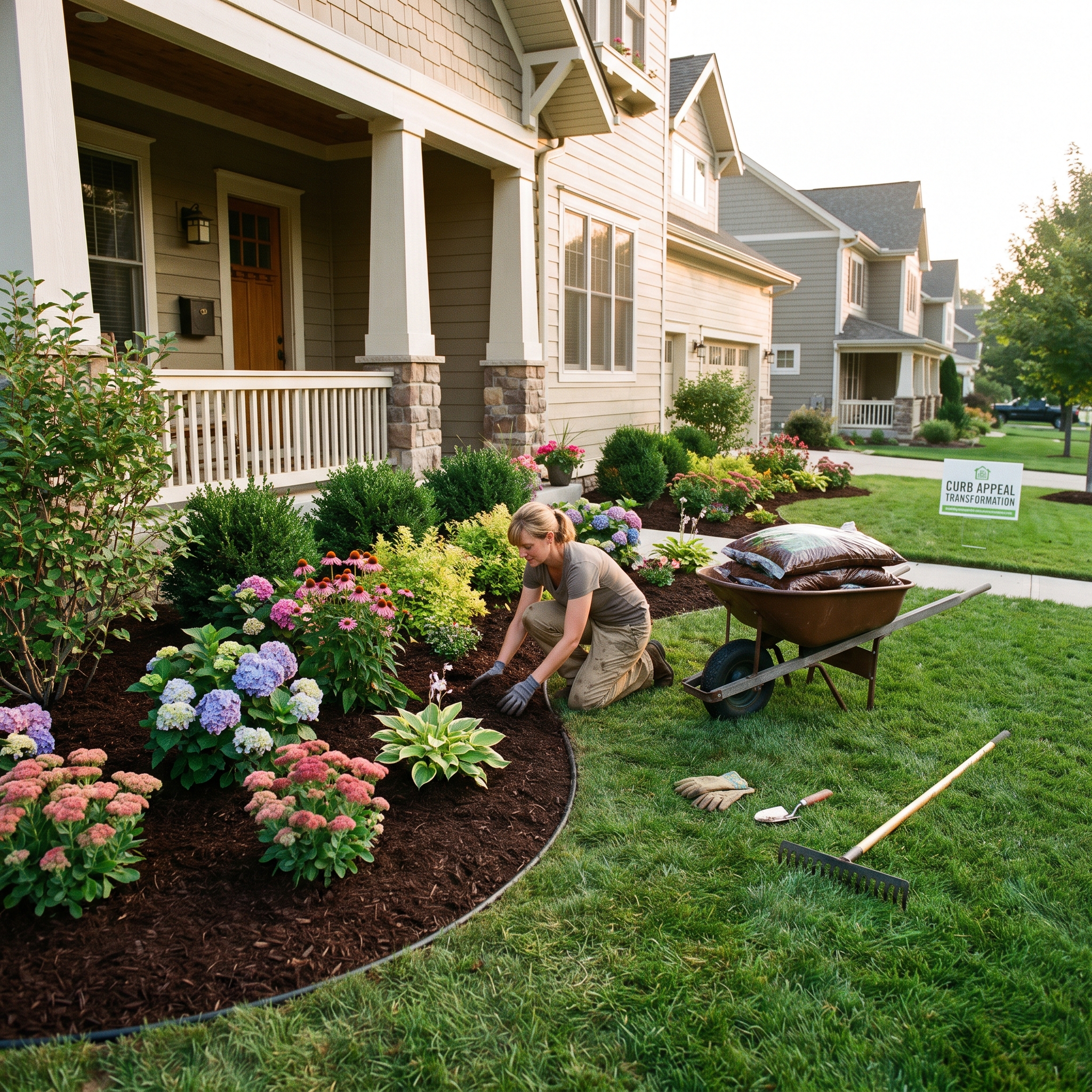
Landscaping delivers one of the highest perceived value increases relative to actual cost. Well-maintained beds with fresh mulch, defined edges, and healthy plants signal that the entire property receives regular care.
DIY-Safe Scope: Planting flowers and shrubs, spreading mulch, edging beds, basic pruning, installing landscape fabric.
Licensed Professional Required: Tree removal (especially near structures or power lines), major grading changes, irrigation system installation, retaining walls over 3 feet high.
Tool List:
Material List:
Step-by-Step Process:
Common Mistakes: Piling mulch against house siding or tree trunks traps moisture and causes rot. Applying mulch too thick (over 4 inches) suffocates plant roots. Skipping the edging step makes beds look sloppy within weeks.
Cost Breakdown:
Time Investment: 3-5 hours for 150 square feet
Choose plants appropriate for your climate zone and the specific light conditions of each bed. Native plants require less maintenance and water than exotic species.
Front Yard Plant Strategy:
Cost Breakdown:
For more budget-friendly exterior improvements, explore our collection of budget curb appeal DIY projects.
Dirt, mildew, and grime accumulate on siding, driveways, walkways, and decks. Power washing removes years of buildup in hours, revealing the original color and condition underneath. This project delivers dramatic visual improvement for minimal cost.
DIY-Safe Scope: Washing vinyl siding, concrete driveways and walkways, composite decking, brick, and stone surfaces.
Safety Callout: Power washers operate at 1,500-3,000 PSI and can cause serious injury. Never point the spray at people, pets, or windows. Wear safety glasses and closed-toe shoes. Keep the nozzle moving to avoid damaging surfaces.
When to Call a Professional: Wood siding and painted surfaces require lower pressure and specific techniques to avoid damage. Second-story work requires proper ladder safety or scaffolding. If you’re uncomfortable with heights or handling high-pressure equipment, hire a professional.
Tool List:
Material List:
Step-by-Step Process:
Common Mistakes: Using too narrow a nozzle or holding it too close etches concrete and damages siding. Starting at the bottom causes streaking. Forgetting to rinse leaves detergent residue that attracts dirt.
Cost Breakdown:
Time Investment: 3-6 hours for average home exterior
Proper exterior lighting enhances safety, security, and nighttime curb appeal. Well-placed fixtures highlight architectural features and create welcoming ambiance.
DIY-Safe Scope: Replacing existing light fixtures on the same electrical box, installing solar-powered path lights, adding low-voltage landscape lighting systems.
Licensed Professional Required: Installing new electrical circuits, running new wiring through walls, any work inside the electrical panel, installing fixtures where no electrical box exists.
Safety Callout: All electrical work carries risk of shock or fire. Turn off power at the breaker before touching any wiring. Use a non-contact voltage tester to verify power is off. If you’re uncomfortable working with electrical connections, hire a licensed electrician.
Swapping outdated fixtures for modern designs takes 30-60 minutes per fixture and requires only basic tools.
Tool List:
Step-by-Step Process:
Cost Breakdown:
Time Investment: 30-60 minutes per fixture
Low-voltage systems (12V) are DIY-safe and don’t require permits. They highlight walkways, plants, and architectural features.
Tool List:
Material List:
Cost Breakdown:
Time Investment: 3-5 hours for installation
Learn more about DIY home improvement projects that add value throughout your property.
Small details create cohesive design and signal attention to maintenance. Mismatched, dated, or damaged hardware detracts from otherwise attractive homes.
DIY-Safe Scope: All of these projects are completely DIY-safe and require only basic hand tools.
Visible, attractive house numbers improve curb appeal and help emergency services locate your home.
Tool List:
Material List:
Installation Tips:
Cost Breakdown:
Time Investment: 30-60 minutes
A new mailbox costs $30-150 and takes 1-2 hours to install. Choose a style that complements your home’s architecture.
Tool List:
Cost Breakdown:
Time Investment: 1-3 hours depending on type
Matching hardware creates visual cohesion. Update door handles, house numbers, light fixtures, and garage door hardware in the same finish.
Popular Finish Options:
Cost Breakdown:
Peeling paint, faded colors, and worn trim broadcast deferred maintenance. Fresh paint transforms home exteriors more dramatically than almost any other improvement.
DIY-Safe Scope: Painting trim, shutters, and single-story siding. Touching up small areas of damage.
Licensed Professional Required: Full exterior repaints on two-story homes (safety and equipment requirements), lead paint remediation (homes built before 1978), extensive wood rot repair affecting structural elements.
Painting trim and shutters costs $100-300 in materials and takes a weekend. This targeted approach delivers major visual impact without the commitment of a full exterior repaint.
Tool List:
Material List:
Step-by-Step Process:
Common Mistakes: Painting over dirt or mildew causes adhesion failure. Skipping caulking allows moisture intrusion. Painting in direct sunlight or temperatures below 50°F affects paint performance.
Cost Breakdown:
Time Investment: 8-16 hours depending on trim amount
For comprehensive guidance on exterior painting, see our detailed guide on how to paint exterior siding.
Cracked, stained, or deteriorating driveways significantly impact curb appeal. The repair approach depends on material type and damage extent.
DIY-Safe Scope: Filling small cracks in concrete or asphalt, cleaning and sealing driveways, patching small damaged areas.
Licensed Professional Required: Full driveway replacement, major structural repairs, grading issues causing drainage problems.
Small cracks (less than 1/4 inch wide) are straightforward DIY repairs that prevent water intrusion and further damage.
Tool List:
Material List:
Step-by-Step Process:
Cost Breakdown:
Time Investment: 2-4 hours including prep and cleanup
For detailed instructions, read our guide on how to repair cracks in a concrete driveway.
Sealing asphalt driveways every 2-3 years extends lifespan and improves appearance. This project requires dry weather and 48 hours of no traffic.
Tool List:
Material List:
Cost Breakdown:
Time Investment: 4-6 hours plus 48-hour cure time
Architectural details add character and visual interest. Window boxes and shutters create dimension and color opportunities.
DIY-Safe Scope: Installing decorative shutters, mounting window boxes, planting and maintaining window box gardens.
Tool List:
Material List:
Installation Tips:
Cost Breakdown per Window:
Time Investment: 1-2 hours per window box
Shutters add color and architectural interest. Choose sizes proportional to your windows, shutters should appear functional even if they’re decorative.
Cost Breakdown per Window:
Time Investment: 30-45 minutes per window
Safe, attractive walkways guide visitors to your entrance. Cracked, uneven, or poorly lit paths create safety hazards and negative impressions.
DIY-Safe Scope: Cleaning walkways, filling small cracks, installing solar path lights, adding border plants.
Licensed Professional Required: Major walkway replacement, addressing significant settling or drainage issues, structural step repairs.
Power Washing: Removes years of dirt and stains (covered in earlier section)
Crack Filling: Same process as driveway repairs
Border Definition: Edge walkways with brick, stone, or metal edging for clean lines
Path Lighting: Solar lights require no wiring and cost $15-40 per light
Cost Breakdown:
Time Investment: 3-5 hours
Understanding which projects deliver the best returns helps prioritize your efforts and budget. Here’s what the data shows for curb appeal projects home value improvements:
Highest ROI Projects:
Mid-Range ROI Projects:
Important Context: ROI percentages represent recovered costs at sale. Perceived value improvements (how much more attractive your home appears) often exceed actual cost recovery but significantly impact sale speed and buyer interest.
For more projects that add measurable value, explore our guide to beginner DIY skills that add real value.
Tackle curb appeal projects home value improvements strategically rather than randomly. This approach maximizes impact while managing time and budget.
Phase 1: Clean and Repair (Weekend 1)
Phase 2: Paint and Update (Weekends 2-3)
Phase 3: Landscape and Enhance (Weekend 4)
Budget Allocation Strategy:
For $500 total budget:
For $1,500 total budget:
For $3,000+ budget:
Over-Landscaping: Excessive plants create maintenance burdens and hide architectural features. Aim for balanced, proportional plantings.
Mismatched Styles: Mixing too many design styles (modern lights with traditional shutters with rustic mailbox) creates visual confusion. Choose a cohesive aesthetic.
Ignoring Maintenance: New improvements require upkeep. Dead plants, peeling paint, and dirty surfaces negate your investment.
Wrong Plant Choices: Selecting plants inappropriate for your climate or light conditions leads to poor growth and wasted money.
Skipping Repairs: Cosmetic improvements can’t hide structural issues. Address rot, damage, and functional problems before focusing on aesthetics.
DIY Overreach: Attempting projects beyond your skill level wastes time and money. Know when to call professionals, especially for electrical, structural, or height-related work.
Spring (March-May):
Summer (June-August):
Fall (September-November):
Winter (December-February):
For a comprehensive approach to home maintenance throughout the year, check our seasonal home maintenance checklist for spring tasks.
What curb appeal project adds the most value? Landscaping improvements typically deliver the highest perceived value increase, often 2-5 times the investment cost. A well-designed landscape with healthy plants, fresh mulch, and defined beds can add $2,000-5,000 in perceived value for $500-1,000 in materials. Front door replacement and garage door updates also rank high, with 60-95% cost recovery at sale.
Can I paint my front door without removing it? Yes, but removing the door produces better results. Painting a door in place risks drips, makes it difficult to reach all surfaces evenly, and prevents you from painting edges. If you must paint in place, use a high-quality angled brush, work in thin coats, and paint during mild weather when you can leave the door open for extended drying.
How much does professional landscaping cost compared to DIY? Professional landscape design and installation typically costs $3,000-8,000 for front yard transformation, while DIY materials for the same area run $500-1,500. You’re paying for design expertise, labor, equipment, and plant knowledge. Many homeowners compromise by hiring a designer for a plan ($300-800) then executing it themselves.
Do I need a permit for exterior home improvements? Most cosmetic improvements (painting, landscaping, replacing doors and windows in existing openings) don’t require permits. You typically need permits for: new electrical circuits, structural changes, fence installation (in many municipalities), major grading changes, and retaining walls over certain heights. Check with your local building department before starting projects that modify structure or systems.
How long do curb appeal improvements take to complete? Individual projects range from 30 minutes (replacing house numbers) to multiple weekends (full exterior painting). Most homeowners can complete a comprehensive curb appeal refresh, including painting the front door, updating landscaping, power washing, and replacing hardware, in 3-4 weekends working 6-8 hours each day. Spreading projects across several weeks prevents burnout and allows proper drying and curing times.
Should I match my neighbors’ homes or stand out? Strike a balance. Your home should fit the neighborhood’s general style and quality level while expressing your taste. In a neighborhood of traditional colonials, an ultra-modern color scheme may hurt rather than help resale value. Within your neighborhood’s style parameters, choose colors and details that make your home memorable for positive reasons, well-maintained, attractive, and welcoming rather than jarring or out of place.
Curb appeal projects home value improvements don’t require massive budgets or professional contractors. The most effective projects, painting your front door, refreshing landscaping, power washing, and updating hardware, cost $500-2,000 in materials and take 3-4 weekends to complete. These investments deliver both immediate visual impact and measurable returns when you sell.
Start with cleaning and repairs to establish a solid foundation. Power wash everything, fill cracks, and address obvious maintenance issues. Then move to high-impact updates: paint or replace your front door, refresh mulch beds with seasonal plants, and update dated hardware and lighting. Each project builds on the previous one, creating a cohesive, well-maintained appearance that signals quality throughout your property.
Remember the boundaries between DIY-safe projects and work requiring licensed professionals. Painting, landscaping, fixture replacement, and cosmetic updates are well within most homeowners’ capabilities. New electrical circuits, structural modifications, and major hardscape installations need professional expertise for safety and code compliance.
Your next step: walk your property with a critical eye and a notepad. List obvious issues (peeling paint, dead plants, cracked concrete) and opportunities for improvement (dated fixtures, bare beds, worn hardware). Prioritize projects by impact and budget, then tackle them systematically over the coming weeks. The transformation will surprise you, and significantly boost your home’s value and appeal.
For more hands-on guidance on home improvement projects you can tackle yourself, visit our complete collection of DIY home improvement projects.