Phone:
(701)814-6992
Physical address:
6296 Donnelly Plaza
Ratkeville, Bahamas.

Phone:
(701)814-6992
Physical address:
6296 Donnelly Plaza
Ratkeville, Bahamas.
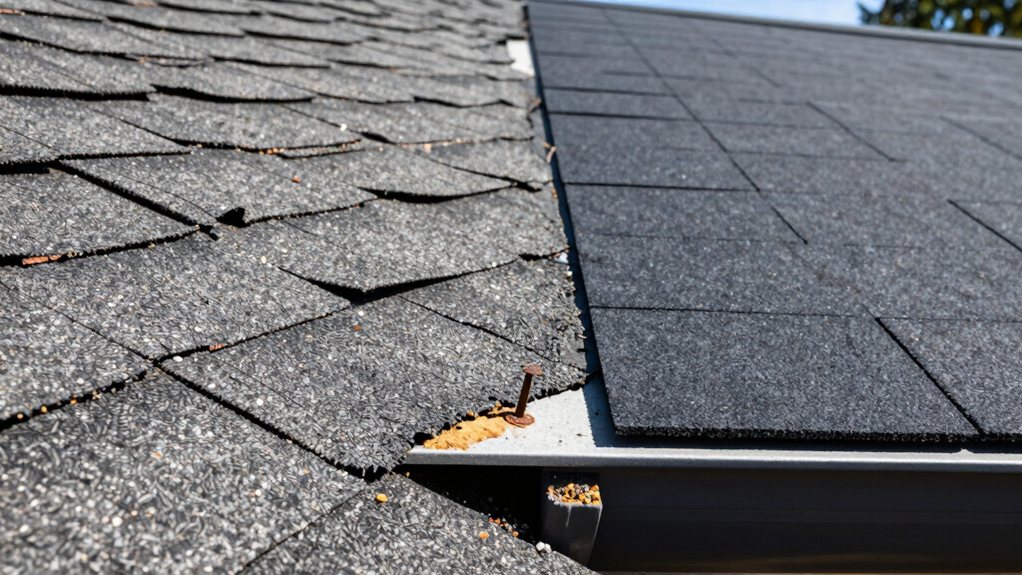
Noticing roof trouble? Discover the key signs that mean you need a full replacement, not just a simple patch.
To figure out if you need a new roof or just a patch, look at its age, condition, and repair history. If it’s over 20–25 years old, has widespread shingle damage, or you’re fixing leaks every year, replacement is likely smarter. Isolated issues, like a few cracked shingles, often just need repair. A pro inspection can give you the clearest answer and a solid plan moving forward.
Table of Contents
When you’re trying to decide whether to repair or replacing leaks on your aging roof, it can feel like a high-stakes guessing game—but you don’t have to go in blind. First, check the age of your asphalt shingle roofs; if they’re past 20–25 years, you’re likely on borrowed time, and replacement becomes smarter.
Next, look at the damage scope. If over a quarter of your shingles are failing, patching is just a temporary bandage.
Finally, consider recurring problems. One leak might be a quick fix, but multiple leaks or interior stains signal a systemic failure. Think about cost, too—if repairs approach half the price of a new roof, investing in a fresh start is the more cost-effective, long-term win.
So, how can you tell if your roof just needs a simple repair instead of a total overhaul?
If your roof is relatively young—under 15 years—and a roof inspection finds isolated issues, you’re likely in the clear.
If your roof is under 15 years old and only has isolated damage, a simple repair is often all you need.
Look for a few damaged asphalt shingles in one spot, not widespread failure.
A single, traceable leak causing small water stains on your ceiling often points to a fixable flashing or shingle problem, not disaster.
Similarly, if granule loss is just in your gutters below one slope, or if flashing around a chimney is rusty, targeted repairs usually do the trick.
These are localized headaches, not signs your whole roof is waving a white flag.
Consider using a gutter cleaning pressure washer to remove granules and debris from gutters and roof valleys as part of targeted repairs.
While it’s great when a roof can get by with a simple patch, some problems are your home’s way of shouting that it’s time for a full replacement.
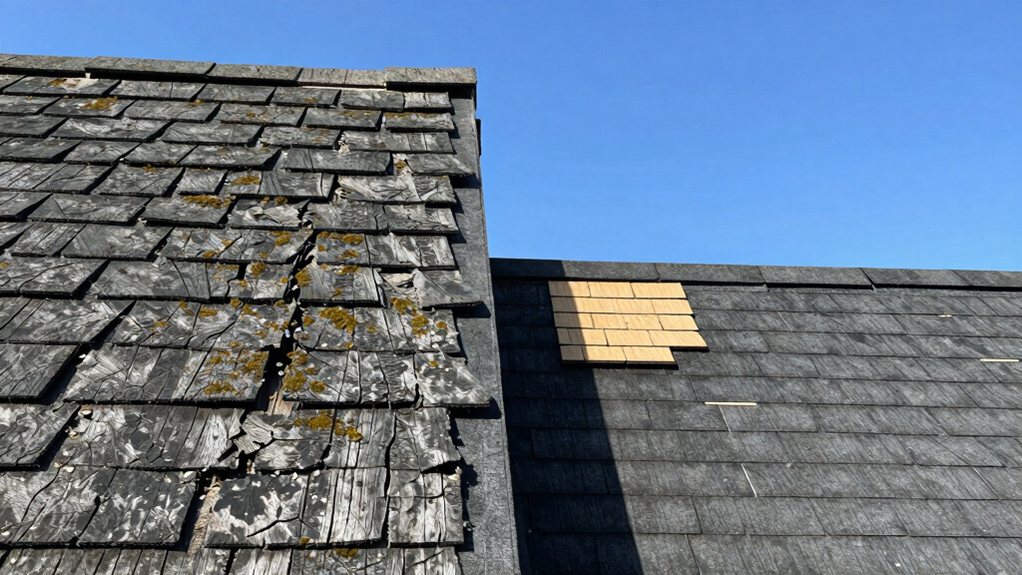
If your roof is older than 20-30 years, that’s a major life stage hint. Look for widespread curling or cracked shingles and heavy granule loss in your gutters; these are clear warning signs the protective surface is failing.
Seeing daylight through the roof boards or noticing a sagging roofline means serious structural issues.
Finally, if leaks keep coming back despite repairs, you’re just putting a bandage on a bigger problem. These red flags point to one cost-effective solution: investing in a new full roof is the smart move for your home’s health and your peace of mind.
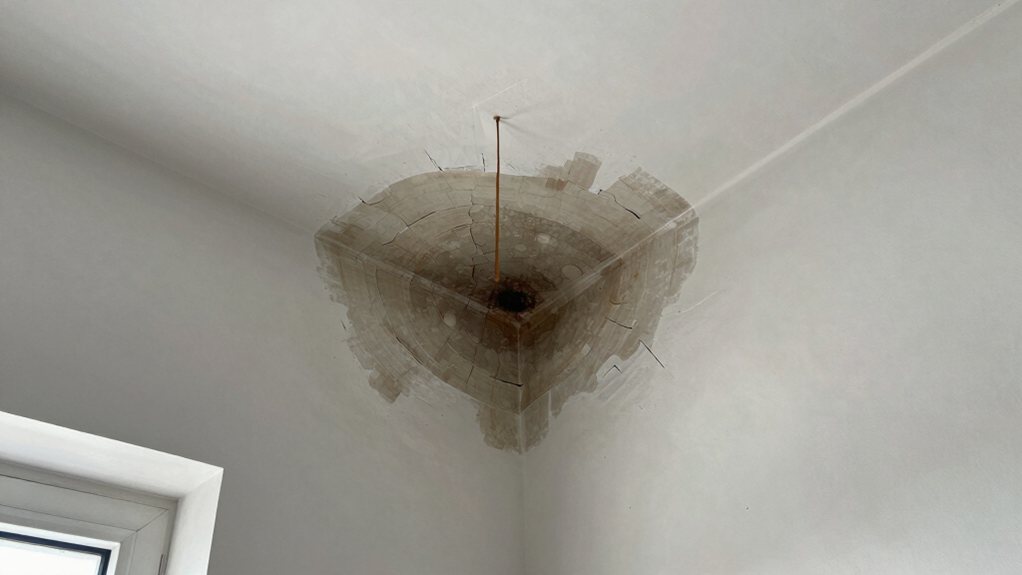
Your home’s interior can tell you a lot about your roof’s health, so don’t ignore the clues it’s giving you.
If you see water stains that keep coming back or spreading, that’s one of the clearest signs your simple roof repairs won’t cut it anymore.
Recurring or spreading water stains signal that simple roof repairs are no longer enough.
Peek in your attic on a sunny day; if you see daylight through the boards, that’s a major breach.
A sagging roofline or damp, moldy rafters are serious structural warnings.
If you’re constantly patching the ceiling in new spots, it’s a systemic failure.
These persistent interior issues often mean you need a new roof, as continued fixes are just throwing good money after bad.
Consider also inspecting connected structures like joists and hiring professional floor joist repair when underlying support is compromised.
Before you decide, your roof’s age and its repair history can tell you a lot about its future.
If it’s getting up there in years or you’re calling for fixes every other season, it’s often a sign that a full replacement will save you money and hassle in the long run. Think of it like an old car that needs constant tinkering—sometimes, it’s just more practical to invest in a new model. Also inspect related exterior components, such as weatherstripping, which can impact overall home performance and may need replacement alongside roofing work.
Because roofs aren’t getting any younger, it’s smart to think about your roof’s age and past repairs when deciding whether to fix it or replace it. Different materials have different lifespans; asphalt roofs last about 15–30 years, so if yours is over 20, it’s time to opt for a replacement over a simple patch.
A metal roof, however, can go decades longer. If you’ve had repeated repairs, your roof is nearing the end of its reliable life, and throwing more money at temporary fixes often costs more in the long run.
Even a re-roofed layer ages faster, so don’t let an old roof fool you—sometimes the most cost-effective repair is a brand-new one.
Often, how frequently you’re calling the roofer tells you more than a single inspection ever could. If your roof seems to need attention every year or two for new leaks or shingle issues, it’s a clear sign things are starting to deteriorate over time.
You’re likely dealing with systemic failure, not merely a random spot. Think of it like an old car; constant patches become more expensive than a new model.
When your repair bills start climbing toward half the cost of replacement, it’s almost certainly time to replace the whole system. That relentless cycle of fixing one leak only to find another is your roof’s way of waving a white flag. Listen to it, and save yourself future headaches.
Before you decide whether to patch a leak or replace the whole roof, you should get a pro to check things out, as their trained eye spots problems you might miss.
Finding the right person for the job means looking for a licensed, insured contractor who’ll give you a clear written report with photos.
That detailed estimate they provide is your roadmap, breaking down costs and warranties so you can compare your options with confidence.
For related interior work, consider professional door frame installation to ensure openings are properly supported and finished.
When you’re deciding whether to fix or replace your roof, getting a pro to look at it’s like having a detective check for clues you can’t see from your yard.
A good roofing professional won’t just glance at your shingles; they’ll inspect your attic, flashing, and vents with special tools to find hidden moisture or rot.
This thorough check clarifies your true roof needs.
The roofing contractor then provides a detailed written estimate, which is your roadmap for budgeting.
It lists repair options, materials, and costs, helping you compare bids smartly.
Plus, their official report and photos are golden if you need to file an insurance claim, turning a stressful guess into a clear, confident plan.
High-end projects often use luxury home renovation tools designed for superior performance and finish.
After you’ve had your roof inspected, the next smart move is picking the right person for the job.
Don’t just hire the first contractor you find. Get at least three detailed, written estimates so you can compare them fairly. Make sure they’ve specific experience with your roofing material, like asphalt or metal, and ask to see photos from recent re-roof projects.
A great contractor will also excel in customer service, providing references you can actually call and clear warranties.
Always verify their license and insurance—it’s a must. Finally, avoid anyone who asks for a huge cash payment upfront or gives a vague schedule.
Doing this homework gives you peace of mind that your investment is secure. Consider confirming the contractor carries a professional contractor tool set to ensure they have the right equipment for the job.
This document is your roadmap, so read it carefully before you commit.
Also, before you proceed, check permit requirements and any manufacturer warranty implications for major repairs or replacements.
While you might be tempted to patch up that leaky spot for a few hundred bucks, it’s smart to step back and compare the short-term fix with the long-term investment of a full replacement. A simple repair may cost $150–$1,000, but if your roof is past its expected life, repeated fixes just accelerate the aging process and can cost you more over five years than a new roof!
Think long-term: spending $8,000 once for 25 years breaks down to about $320 annually. Compare that to yearly $500 repairs that never solve the core problem. A replacement also brings better warranties and energy savings, giving you real peace of mind, while a patch just buys a little more time.
* Act Fast on Emergencies: If there are active leaks, arrange temporary tarping within 24–48 hours.
Don’t let a small drip turn into a big disaster!
* Document and Notify: Snap pictures of common signs like damaged shingle tabs, granule loss, or sagging.
Notify your insurance company promptly and submit everything.
* Plan the Permanent Fix: Get at least three detailed bids from licensed contractors.
Prioritize protecting your home’s envelope, and don’t forget to evaluate attic ventilation.
So, you’ve got the facts. Remember, your roof’s telling you a story. If it’s a minor plot twist, a repair might be the perfect edit. But if you’re seeing major red flags, a full replacement is the wise, long-term sequel. Don’t stress; just get a trusted pro to inspect it. Then you can make a confident, cost-smart choice and get back to simply enjoying your cozy, dry home.