Phone:
(701)814-6992
Physical address:
6296 Donnelly Plaza
Ratkeville, Bahamas.

Phone:
(701)814-6992
Physical address:
6296 Donnelly Plaza
Ratkeville, Bahamas.
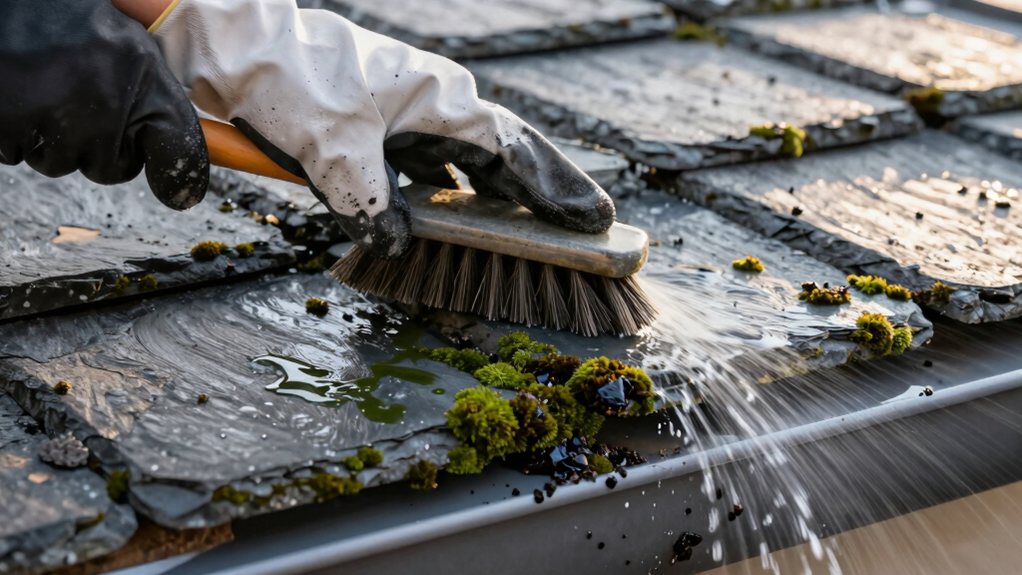
Uncover safe roof cleaning steps for moss and algae, ensuring you avoid damaging your shingles while learning how to...
First, figure out if you’ve got algae, moss, or mold. Once you know, suit up with gloves, goggles, and sturdy shoes, because safety comes first. Apply a cleaner like oxygen bleach, let it soak, then gently scrub with a soft brush, always brushing downhill. Rinse it all off with a garden hose—never a pressure washer, which can ruin your shingles. Stick around, and we’ll break down how to keep it from coming back.
Table of Contents
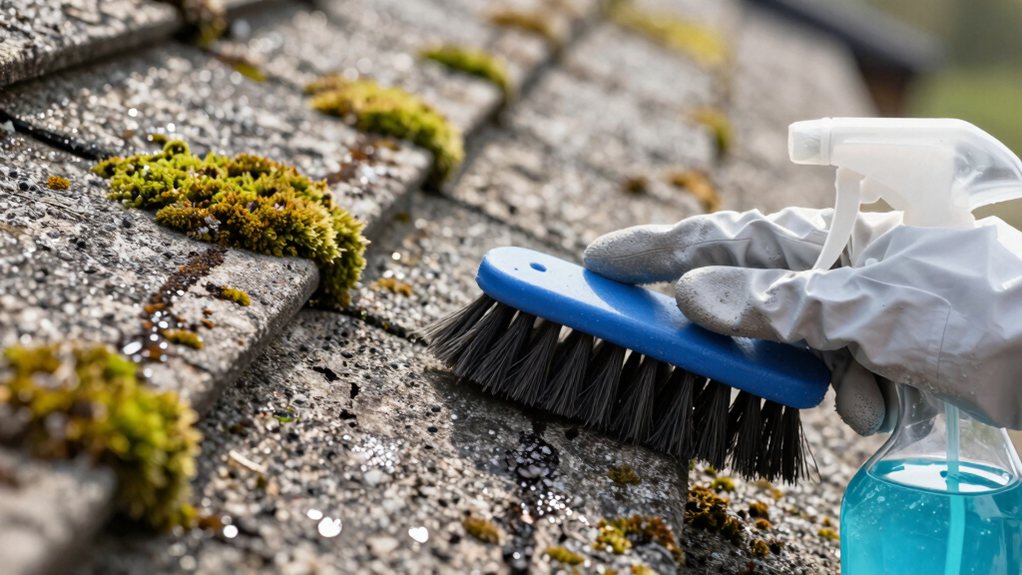
Have you ever looked up at your roof and noticed some unexpected green or black streaks? Don’t panic, but let’s figure out what you’re dealing with.
Those black streaks running downhill are likely Roof Algae**, a flat, cosmetic issue common on shaded shingles**.
If you see fuzzy, bright green clumps you can brush off, that’s moss on your roof. This moss growth is spongy, traps moisture, and can actually lift shingles over time.
While both thrive in damp areas, moss is thicker and more structural. Mold is rarer but slimy and often comes with a musty smell indoors. Correctly identifying whether it’s algae or moss is your first step to a safe, effective clean-up. You can consider using an electric pressure washer for some cleaning tasks, but take care to use low pressure and the correct nozzle to avoid damaging shingles.
Now that you know what’s growing up there, it’s time to get your gear together and mix up your cleaning solution.
Your PPE is non-negotiable: wear chemical-resistant gloves, goggles, long layers, and a respirator.
If you’re going on the roof, a safety harness is a must, and please, NEVER PRESSURE WASH shingles—you’ll blast off the granules!
Use a ladder stabilizer for secure climbing.
For applying your cleaner, a gentle garden pump sprayer is perfect.
Mix an oxygen bleach solution according to the label; it’s a powerful, user-friendly choice.
This prep might seem like a lot, but it’s the secret to a clean roof and a safe you.
Let’s mix carefully and gear up smartly.
Consider purchasing a professional safety gear kit to ensure you have all the necessary PPE.
Applying your cleaning solution is where the magic starts to happen, turning that green roof back to its original color. Load your garden sprayer with the mixture of water and oxygen bleach or sodium hypochlorite.
Spray it evenly, letting it soak for 20–30 minutes to kill the roof moss and algae. For algae removal and dead moss, gently scrub with a soft-bristled broom, using downward strokes along the shingle course.
Never scrape upward, as that can cause damaging shingles. Finally, thoroughly rinse with a garden hose on a gentle setting.
Avoid using a pressure washer; its high force strips protective granules and shortens your roof’s life. This careful process cleans effectively while keeping your shingles safe and sound. Consider using tools specifically made for gutters and roofs, such as a gutter cleaning pressure washer, when tackling nearby gutter buildup rather than the roof itself.
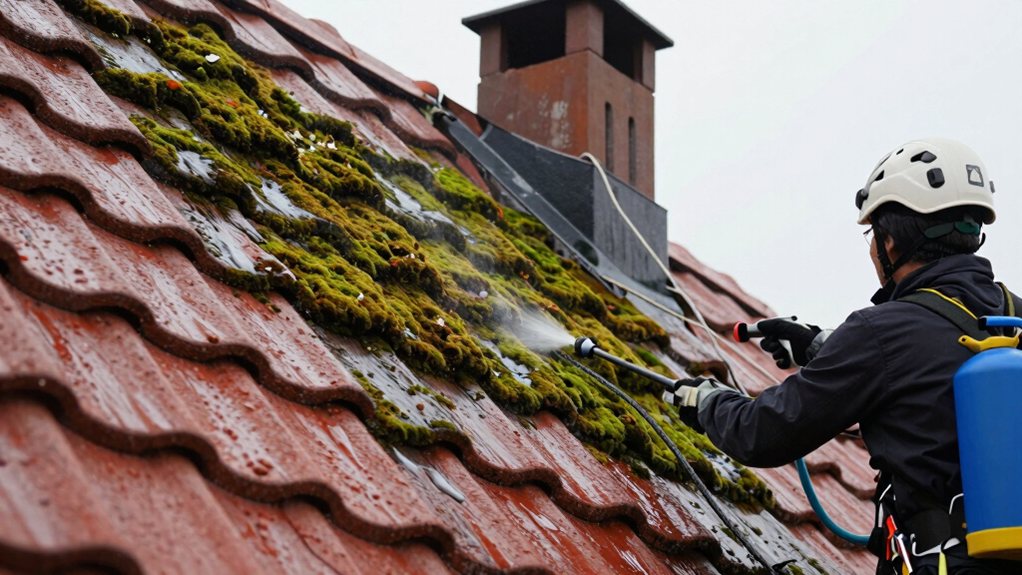
This smart move protects you and prevents you from accidentally using a method that could damage your roof.
Think of it as an investment in smart roof maintenance.
For larger commercial roofs, consider hiring professionals who use commercial-grade pressure washers to ensure efficient, safe cleaning.
While you might call in a pro for the heavy lifting, your work isn’t done just because the moss is gone. To prevent algae and moss from returning, install zinc strips beneath the shingles along your roof ridge. When rain water washes over them, trace metals flow down, creating a surface where algae and moss struggle to grow.
For best coverage, also tuck these strips near chimneys and under any overhanging tree branches, which you should trim back to reduce shade and spores. This smart maintenance, combined with keeping gutters clear, makes your initial Roof Cleaning last much longer.
Just remember, while it’s a great defense, you should still check yearly and gently Remove Algae you spot, giving those strips a fighting chance.
When you’re cleaning your roof, don’t let chemical runoff harm your garden or stain your driveway—always protect your landscaping and rinse everything down.
Skipping a professional consultation for major issues might seem fine, but it can lead to bigger, pricier problems down the road.
Also, never neglect safety precautions, because a mossy roof is as slippery as a skating rink, and we don’t want any unexpected trips to the emergency room. If you plan to repaint or seal after cleaning, consider using an exterior paint sprayer system to get even, efficient coverage.
Prefer pH-neutral formulas to protect your roof finish and surrounding landscaping.
Following those smart steps to protect your yard is great, but let’s talk about one of the biggest mistakes you can make up there: skipping a professional’s advice before you start.
You might think you just need to spray and forget some chemicals to be rid of moss, but a pro inspection checks for hidden problems.
They’ll spot soft, rotten wood under that algae or moss, or a damaged row of shingles you’d miss.
Cleaning a weak roof is dangerous and pointless. Their advice on preventive measures, like installing zinc or copper strips, saves you money long-term. So, please, don’t just grab a pressure washer and hope. A quick consultation guarantees your cleaning effort actually works and keeps you safe. If inspections reveal structural issues, consult floor joist repair professionals to address underlying rot before cleaning.
A careful plan keeps you and your roof secure. Many commercial-grade leaf blower options are available at local hardware stores.
And there you have it! By following these safe steps, you can reclaim your roof from that green gunk. Remember, a little gentle scrubbing now can save you a big headache later. If the job feels too steep, don’t hesitate to call in the pros. Keep up with those zinc strips and gutter checks, and you’ll enjoy a clean, healthy roof for many seasons to come. Nice work!