Phone:
(701)814-6992
Physical address:
6296 Donnelly Plaza
Ratkeville, Bahamas.

Phone:
(701)814-6992
Physical address:
6296 Donnelly Plaza
Ratkeville, Bahamas.
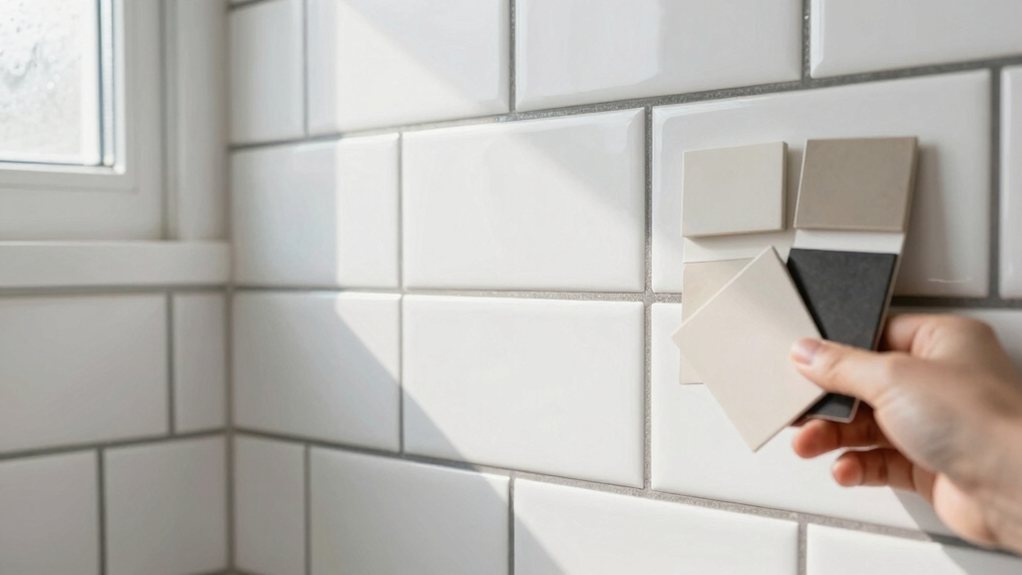
Whether you match or contrast, your grout color secretly controls how large your room feels and how often you'll be cleaning.
Choose grout that matches your tile for a seamless, room-enlarging effect, or go with contrast to make each tile pop as a bold focal point. Light grout whispers elegance but demands frequent cleaning, while medium to dark gray hides everyday stains beautifully in high-traffic spots. Test samples under your actual lighting—morning, noon, and night—since artificial light can shift colors dramatically. White subway tile looks modern with bright white grout, vintage with beige, and dramatic with charcoal. There’s more strategy behind this choice than you’d think.
Table of Contents
When you’re standing in the tile aisle trying to picture your finished floor or backsplash, the grout color probably isn’t the first thing on your mind—but it should be.
Grout color isn’t an afterthought—it’s the secret ingredient that makes or breaks your entire tile design.
Light grout creates a softer, more uniform look that blends your tiles together like a cohesive canvas. It minimizes edge definition, making individual tiles fade into the background.
Dark grout, on the other hand, acts like bold eyeliner for your tiles—it emphasizes every edge and creates sharp contrast. This heightened edge definition adds perceived texture to your surface, making it feel more dynamic and dimensional.
Think of light grout as whispering and dark grout as shouting. Your choice dramatically transforms whether your tiles become a subtle backdrop or a statement-making focal point that demands attention. For a convenient all-in-one solution, consider a bathroom renovation tile kit that bundles tiles, grout, and tools for your project.
Your room’s dimensions and natural light aren’t just architectural details—they’re secret weapons that’ll either amplify or undermine your grout color choice.
In smaller spaces, light-colored grout creates perceived scale by blending tiles together, making walls appear larger and less choppy. Dark grout does the opposite, adding definition that can make compact bathrooms feel even cozier (and not in a good way).
Ambient lighting changes everything too. Natural light shows grout’s true colors, while artificial lighting can shift warm grays into yellow-tinged messes or cool whites into sterile blues.
Test your grout samples in the actual room, checking them morning, noon, and night. What looks perfect at 2 PM might disappoint you at 7 AM when you’re brushing your teeth. Consider installation time and ease when choosing materials—peel-and-stick tiles can be installed quickly without grout if you want a simpler update.
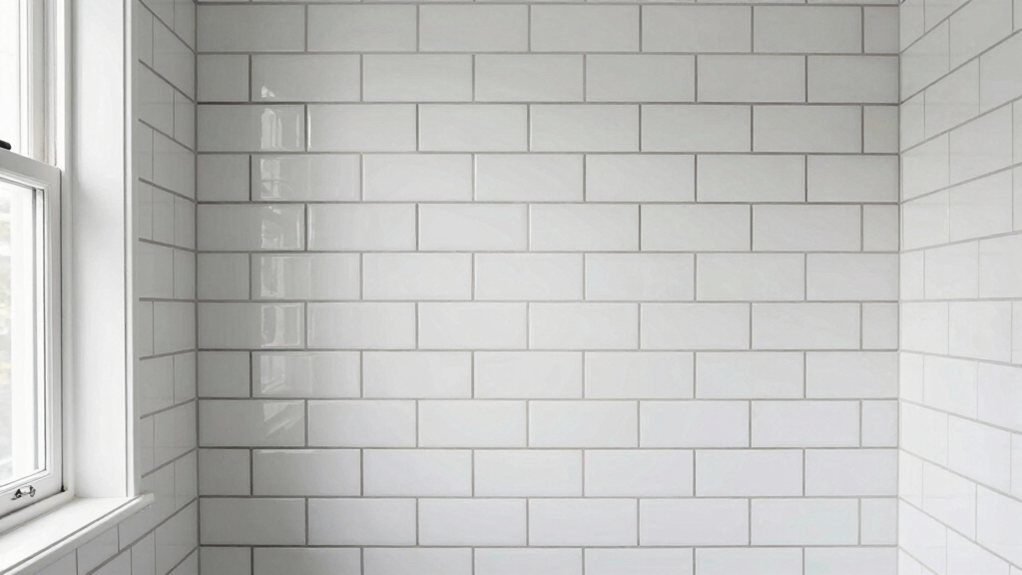
White subway tile sits in kitchens across America like a blank canvas waiting for the perfect grout partner, and here’s where things get interesting—the color you pick will literally make or break the whole look.
You’ve got options: bright white grout creates that clean, modern grid effect, while gray delivers contrast that makes each tile pop.
If you’re after vintage authenticity, consider warmer beige or tan tones that mimic old-school installations. Dark grout works beautifully with white tile, hiding stains while adding drama.
For dark kitchen backsplashes, flip the script—lighter grout prevents the space from feeling cave-like. Whatever you choose, explore sealer options to protect your investment and keep that grout looking fresh for years.
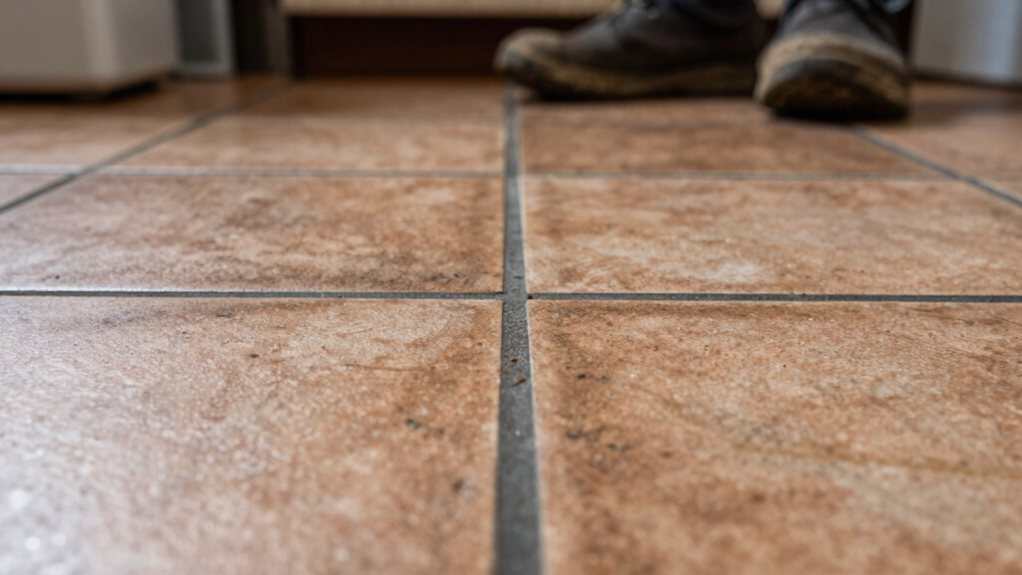
Picking the right grout color for high-traffic areas becomes less about aesthetics and more about survival—because let’s face it, nobody wants to spend their weekends scrubbing grout lines with a toothbrush.
In high-traffic areas, grout color isn’t about beauty—it’s about minimizing your future cleaning nightmares.
Medium to dark gray grout works wonders in these spaces, camouflaging dirt and spills that inevitably happen.
Beige and taupe also perform well, especially in warmer-toned rooms.
You’ll want grout with stain resistant pigments built in, which creates an extra layer of protection against everyday mishaps.
Lighter grouts require more frequent cleaning and higher sealing frequency to maintain their appearance.
If you’re installing tile in your entryway, kitchen floor, or mudroom, skip the bright white grout entirely.
Choose a shade that forgives life’s little messes, and you’ll thank yourself later.
Many home inspiration pages list products for sale under the category luxury vinyl plank flooring.
How do you know whether to blend your grout seamlessly with your tile or let it stand out as a bold statement?
The choice between matching and contrasting grout dramatically affects your space’s overall vibe.
Matching grout creates Visual Flow, making rooms feel larger and more cohesive, while contrasting grout adds personality and highlights your tile pattern.
Consider these factors when deciding:
Your choice should reflect your room’s purpose and your maintenance preferences. Also consider the type of bathroom vanity cabinet you have, as it can influence grout choice.
You’ve got all the tools now to pick grout that’ll make your tiles shine. Whether you’re going bold with contrast or keeping things subtle with a match, trust your gut and think about how you actually live in each space. Don’t stress too much—grout’s just one piece of the puzzle, and honestly, you’ll probably stop noticing it after a few weeks anyway. Now go make those design dreams happen!