Phone:
(701)814-6992
Physical address:
6296 Donnelly Plaza
Ratkeville, Bahamas.

Phone:
(701)814-6992
Physical address:
6296 Donnelly Plaza
Ratkeville, Bahamas.
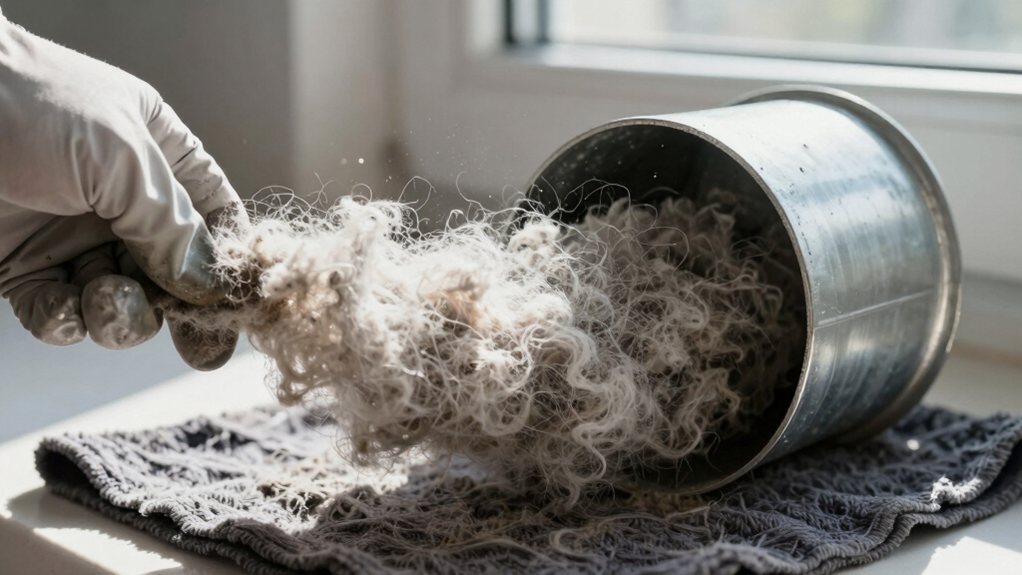
Learn to clean your dryer vent and discover the hidden fire hazard lurking within your laundry room.
You can tackle this serious fire risk yourself this weekend. First, unplug your dryer and disconnect its duct. Use a flexible brush and a strong vacuum to clean out all the hidden lint, which is surprisingly flammable. Keep going until you feel a strong blast of warm air at the outside vent. Swap any dangerous plastic ductwork for rigid metal. It’s a simple, satisfying project, and we’ve got a handy checklist to help you keep it safe.
Table of Contents
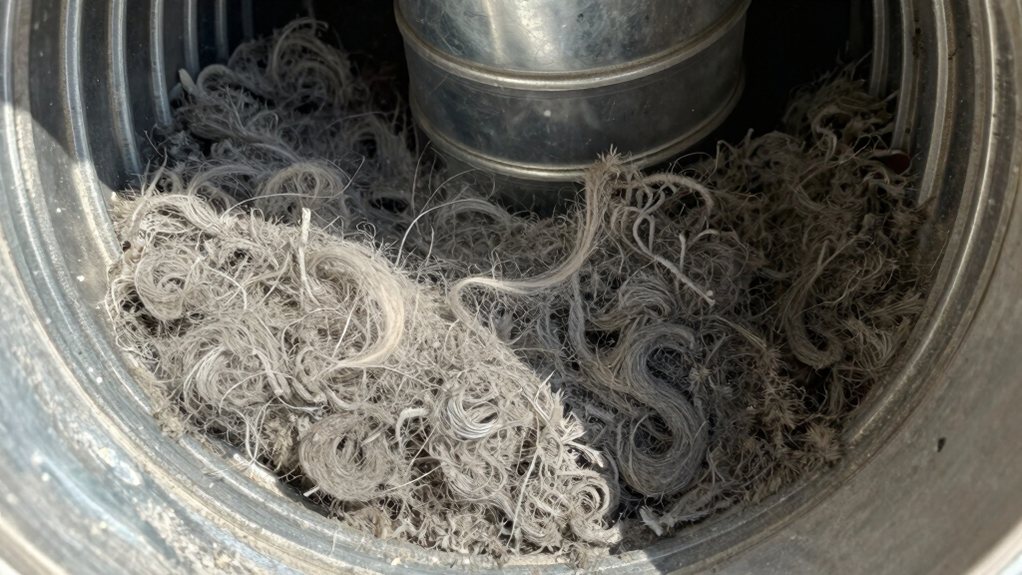
While you might think of lint as just a harmless nuisance, that fluffy stuff is actually a major fire hazard because it can ignite surprisingly easily. Compacted, heated lint in your dryer vent system can reach ignition temperatures and catch fire.
Once it ignites, flames can race up the ductwork and out the external vent, exposing nearby materials. Lint doesn’t just clog your screen; it builds up in the trap tray and vent pipes, restricting airflow and raising dangerous heat levels.
That neglected flexible plastic ducting? It can melt, letting fire escape. To stay safe, you need to make sure your vents are clear and external louvers aren’t stuck.
A little upkeep prevents a major disaster, so don’t let your laundry routine go up in smoke!
* Beyond the Trap: The lint screen catches only some lint;
the hidden ductwork holds the real fire-risk culprits.
* Airflow is Everything: A clear vent means faster drying, lower bills,
and a much happier, safer appliance.
* The Final Test: If you don’t feel a robust blast of warm air outside,
your mission isn’t complete—keep cleaning.
For particularly stubborn debris, consider using a gutter cleaning pressure washer designed for powerful debris removal.
Before you get started on cleaning, gathering the right gear makes all the difference between a frustrating chore and a seamless, successful mission.
For your Vacuum Selection, you’ll need a shop vacuum with strong suction and a long, rigid crevice tool to pull out loosened lint.
Next, grab a flexible cleaning brush kit; pay attention to Brush Sizes, choosing one around 4 inches to scrub standard ducts thoroughly.
Don’t forget basic screwdrivers and a wrench for disconnecting everything.
Most importantly, your Safety Gear—gloves, an N95 respirator, and safety glasses—is non-negotiable for blocking dust and sharp edges.
Finally, have some foil HVAC tape and a flashlight ready for a proper, safe reassembly. You may also consider purchasing a professional safety equipment kit to ensure you have all necessary PPE and tools.
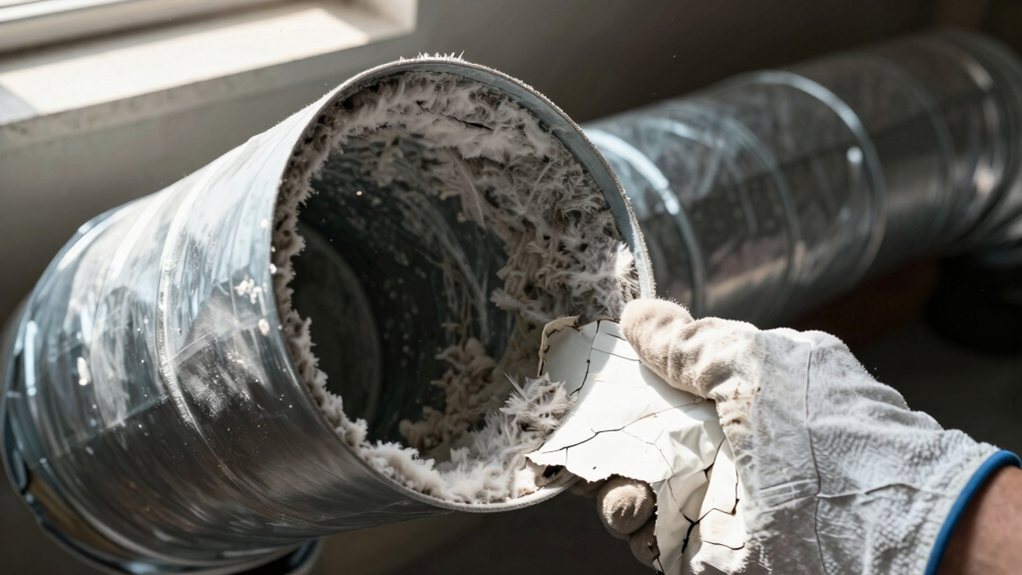
Now that you’ve got your tools lined up, it’s time to take a close look at the dryer duct itself—it’s not just about cleaning it, but making sure the material is safe.
Your inspection is a key fire-safety step. Immediately replace dangerous white corrugated plastic, as it can melt. Also swap out any crushed, torn, or heat-damaged foil-style ducts.
Look for melting, warping, or holes; these flaws let flames travel.
Always secure all joints tightly.
Sticking to a regular maintenance schedule transforms your dryer from a potential hazard back into a trusty, hardworking appliance.
Every six months, you’ll want to clear the lint screen and trap tray, scraping away any crusty buildup. Then, inspect the entire vent pipe, using a brush to remove hidden lint that could ignite. Check the outside vent hood, making sure it opens freely and isn’t clogged. This simple routine is your best service reminder.
Also, note your replacement timeline for any ducting. If you see white plastic tubing, swap it for solid metal immediately, as plastic can melt.
Look for discoloration or melted seals while cleaning, fixing any damage you find. Staying proactive keeps your home safe and your laundry days worry-free. Consider upgrading seals with exterior door weatherstripping designed for exterior doors to improve energy efficiency.
So, you’ve tackled that vent! Give yourself a pat on the back—you’ve seriously boosted your home’s safety. Just remember to check it every six months, because a little maintenance goes a long way in preventing big headaches. Your dryer will run better, your energy bill might shrink, and you can enjoy that fresh laundry smell without a worry. Stay safe, and happy drying!