Phone:
(701)814-6992
Physical address:
6296 Donnelly Plaza
Ratkeville, Bahamas.

Phone:
(701)814-6992
Physical address:
6296 Donnelly Plaza
Ratkeville, Bahamas.
Know how to quiet a noisy furnace; discover the simple fixes before you need to call for help.
First, listen closely to identify the sound—a loud whoosh could mean a clogged filter, while a screech might warn of worn motor bearings. Start by turning off the power, then inspect and tighten any loose panels or screws. Always replace a dirty filter, checking it’s installed with the arrow pointing toward the blower. If the racket continues, it’s smart to call a pro, but more helpful tips are just ahead.
Table of Contents
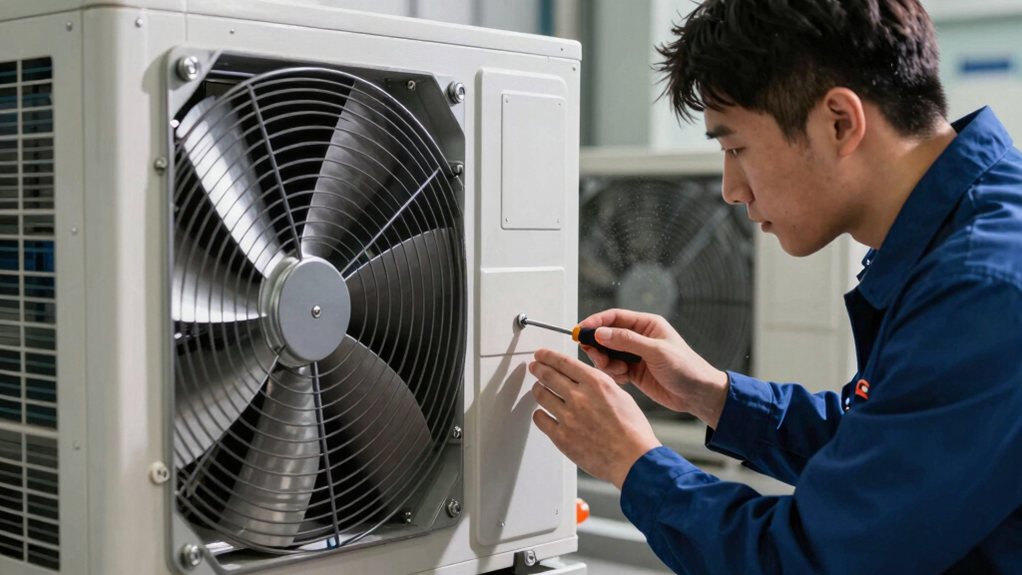
Ever wonder what that new racket from your furnace really means? Don’t panic—that noise is your system’s way of talking to you.
A loud whoosh often means high static pressure from a problem like clogged air filters or duct/return air leaks.
Hear a sharp boom at startup? That’s delayed ignition, which is as bad as it sounds.
A high-pitched screech usually points to worn blower motor bearings or a misaligned/blade-touching blower wheel.
Finally, that annoying rattle is frequently just loose panels or fasteners needing a simple tighten.
Listening closely helps you describe the sound to a pro, making the fix faster and maybe saving you some cash. Your ears are your first diagnostic tool!
Now that you’ve listened and identified the type of noise your furnace is making, you can start with some simple checks before you call for help. First, turn the power off at the furnace switch or breaker.
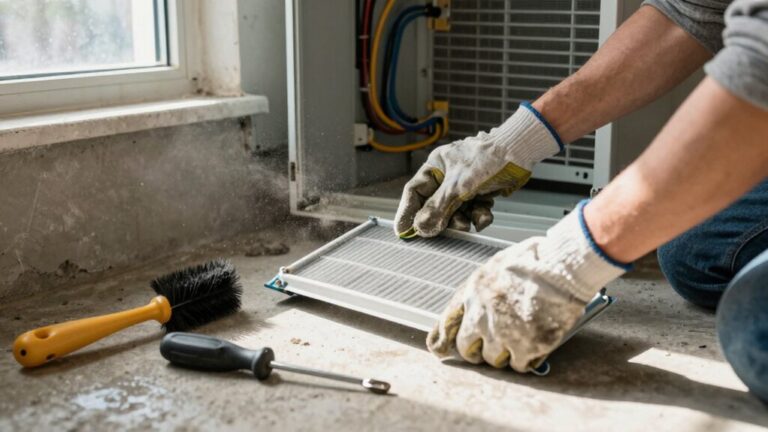
Inspect the blower area for any loose or damaged parts or dirt buildup that could cause furnace noises. Tighten any access panels or screws you find.
With power still off, check and replace a dirty air filter; a clogged one creates major airflow issues. You can also have someone turn the fan on while you listen near the open blower compartment.
With the power off, replace a dirty filter to fix airflow issues, then listen near the blower with the fan running.
If the racket stops, you’ve likely found an airflow problem. These easy steps solve many common, noisy headaches. Consider integrating a whole house air purifier into your HVAC system to improve overall indoor air quality.
Have you ever heard a loud whoosh or whistle from your vents when the heat kicks on? That noise often points to airflow problems within your ducts.
First, inspect your air vents to make sure none are closed or blocked by furniture, as this can cause whistling. Next, check your filter; a dirty one makes your HVAC system work harder, raising pressure and noise.
Your blower might be moving air too fast through undersized ducts. Listen for rattles from loose seams—sealing them with mastic tape can help a lot. If returns are too small, adding a vent can reduce restriction. Balancing your airflow is key to a quieter, happier home. Also consider sealing gaps around exterior doors with weatherstripping to prevent drafts that can affect HVAC efficiency.
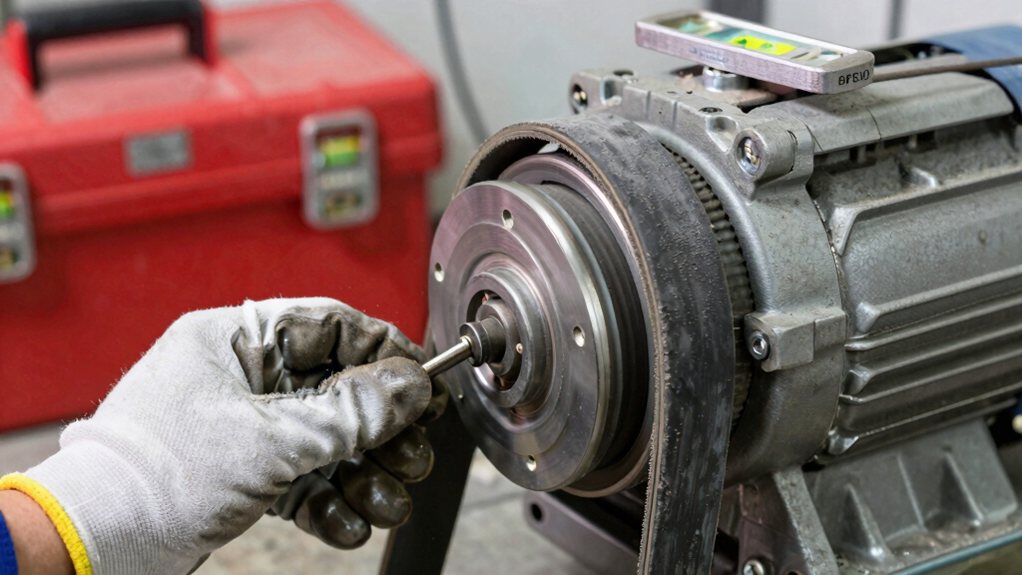
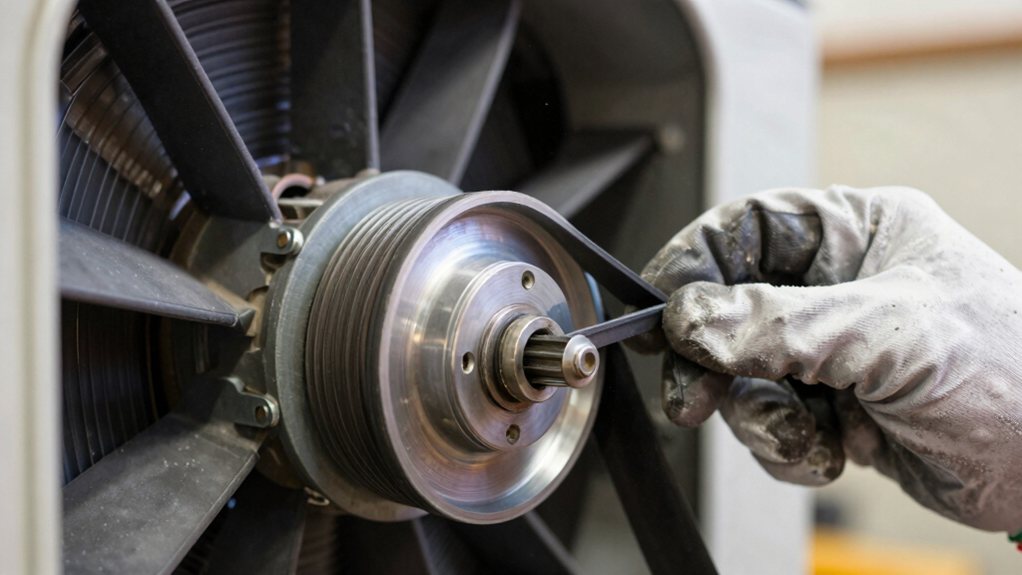
Tracking down a noisy furnace blower motor is a bit like being a home detective—you’re listening for clues and looking for signs of trouble.
First, check the blower assembly itself. Inspect the blower wheel for dirt clumps or bent blades, as these cause whooshing and vibration.
A clogged air filter creates a strain on the blower, making it work harder and louder, so replace it if it’s dirty.
Listen for high-pitched squeals; these often point to worn bearings.
While some motors allow you to lubricate moving parts, severely worn ones usually need replacement.
Finally, tighten any loose mounting screws to stop rattles.
A systematic check like this can often quiet things down and save you a service call.
Start by checking your ductwork for any loose screws or panels, because those can cause quite a racket when the system runs.
Next, secure everything you find with a screwdriver, and consider adding simple rubber isolation pads under the air handler to stop vibrations from traveling.
A little bit of flexible duct connector and some extra strapping can make a huge difference, turning that annoying rumble into a peaceful hum. For added stability in mounting components, you might even repurpose professional floating shelf hardware to create discrete support points.
Tracing rattles and hums back to their source often leads you to the ductwork, where loose fasteners are a common culprit behind that annoying racket. This is a key part of HVAC regular maintenance, and a little routine maintenance here can dramatically reduce noise.
Start by checking all seams and takeoffs for missing screws, adding #8 pan‑head screws every 6–12 inches. Tighten any loose straps or hangers, making sure supports are spaced every few feet.
Look for metal‑to‑metal contact and add rubber isolation washers—they’re superheroes for preventing noise transfer! Replace any pop‑outs or rusted rivets, and seal the joint with mastic tape.
Snug everything up, but don’t overtighten; you’re stopping rattling noises, not crushing a soda can.
Sometimes, that rattle or hum isn’t coming from the ductwork at all—it’s the furnace or air handler cabinet itself talking back!
Loose access panels are a classic culprit for loud or unusual noises. To quiet things down and make sure your HVAC system operates reliably, follow these steps:
Including this in your annual inspections helps immensely.
For organizing tools and parts, consider a professional tool storage cabinet to keep spare screws and hardware handy.
If the noise continues, it’s wise to call a professional to diagnose deeper issues.
Even after you’ve tightened those noisy panels, your system might still be humming or shaking—and that’s often because vibrations are traveling right into the ductwork and your home’s structure.
To stop this, install vibration isolators. For your furnace or AC unit, use purpose-made pads or mounts between the equipment base and the floor. This decouples the vibration, preventing those loud noises.
Also, add flexible duct connectors; these sleeves break the vibration path to the sheet metal, stopping rattles. If your unit has to work harder against rigid connections, it can wear out faster, leading to noise and inefficiency.
If sizing isolators seems tricky, consult a technician. They’ll make sure everything is seated correctly so your air conditioning runs quietly.
When exactly should you pick up the phone and call in a pro for your noisy furnace? You can handle simple fixes, but some sounds scream for expert help.
Ignoring them risks safety and bigger bills later. Here’s your quick guide to knowing when to dial.
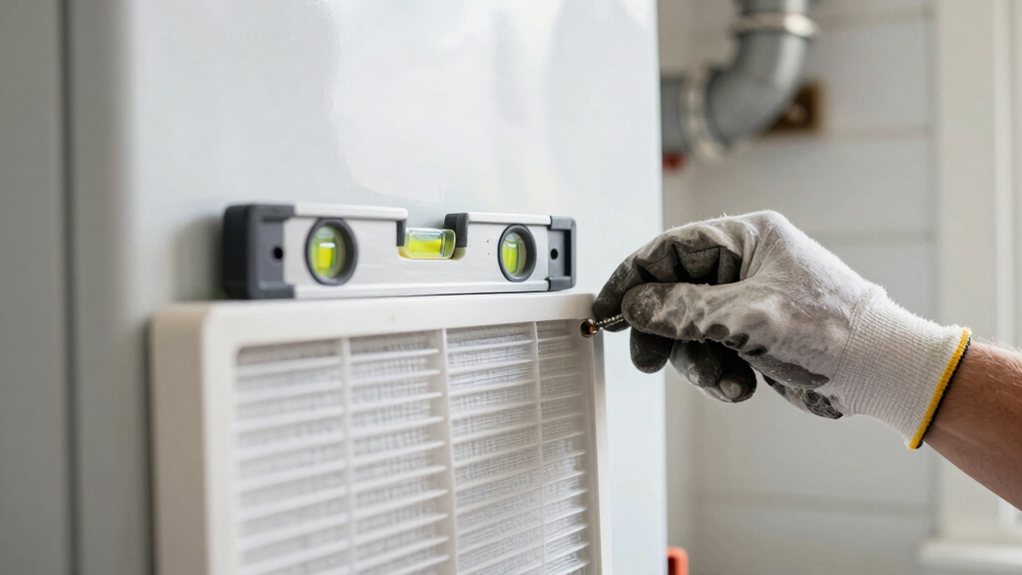
You can keep your furnace running quietly by sticking to a simple maintenance routine.
First, make sure you’re swapping out or cleaning your air filter every one to three months, because a clogged one makes the blower work harder and get noisier.
Also, have a technician check your system’s static pressure during a yearly tune-up, and don’t forget to ask them to lubricate any accessible motor bearings to cut down on squeaks and rattles.
Keeping your furnace quiet and happy starts with a simple but vital task: regularly changing its filter.
This routine is vital for maintaining seamless operation and preventing common causes of noisy airflow.
A clean filter guarantees your furnace runs efficiently and, more importantly, furnace runs quietly.
Neglecting it can lead to costly repairs by letting problems early go unchecked.
Follow these four key tips:
Regularly, a well-lubricated furnace is a quiet furnace, and sticking to a simple lubrication schedule is one of your best defenses against squeaks, rattles, and groans.
Before the heating season begins, inspect and oil any serviceable blower motor ports—most older models need just a few drops of SAE 20 oil.
This routine reduces friction and wear and tear.
If sounds often persist, check for dusty conditions; you may need to lubricate every six months instead.
If the noise continues, you might’ve a sealed-bearing motor, which must never be oiled.
Always disconnect power so your furnace operates safely.
Ignoring furnace lubrication can lead to bigger issues, so consider having a furnace professionally serviced if you’re unsure.
A quality professional safety equipment kit can help protect you during maintenance tasks.
So, you’ve tackled your noisy furnace like a champ! Remember, a lot of those rattles and hums are easy fixes you can handle yourself with a simple check. Just stay on top of your regular maintenance, and your system will thank you with quiet, reliable heat. If the noise gets weird or stubborn, though, don’t hesitate to call in a pro—it’s the smart move to keep your home cozy and peaceful.