Phone:
(701)814-6992
Physical address:
6296 Donnelly Plaza
Ratkeville, Bahamas.

Phone:
(701)814-6992
Physical address:
6296 Donnelly Plaza
Ratkeville, Bahamas.
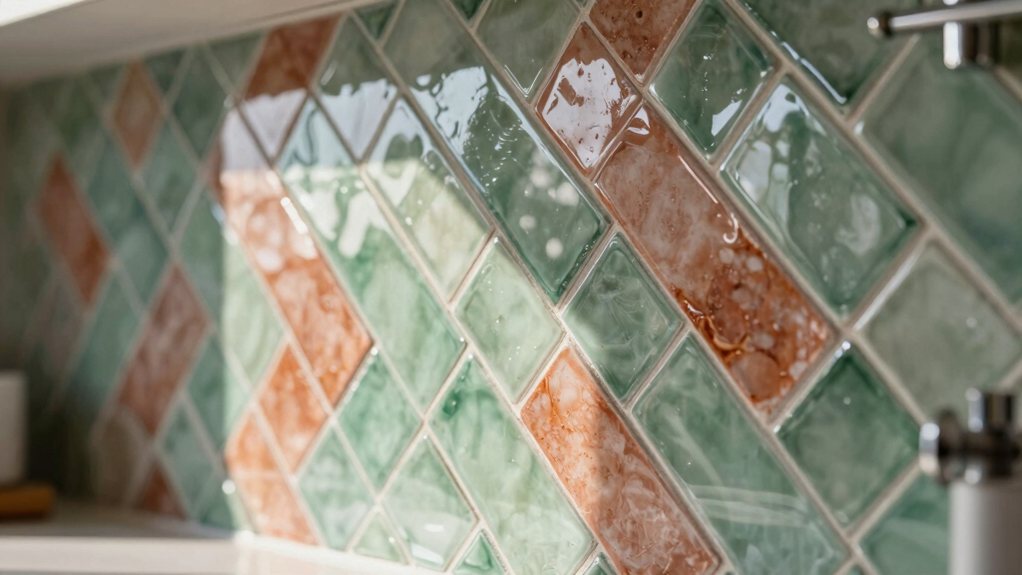
Transform basic tiles into stunning focal points with strategic backsplash patterns that create depth, drama, and dimension beyond standard installations.
Your backsplash layout can make or break your kitchen’s personality—vertical stacked patterns draw the eye upward for a modern vibe, while herringbone creates organic movement and chevron delivers sleeker drama. Mixed materials like stone strips with glass tiles or metallic accents layered over ceramic add dimensional depth that flat surfaces can’t match. Geometric and hexagonal layouts instantly become focal points, especially when lighting hits those angled surfaces. The pattern you choose transforms budget tiles into custom-looking installations, though intricate designs increase material waste and installation time—so there’s strategy behind making basic materials look intentionally high-end.
Table of Contents
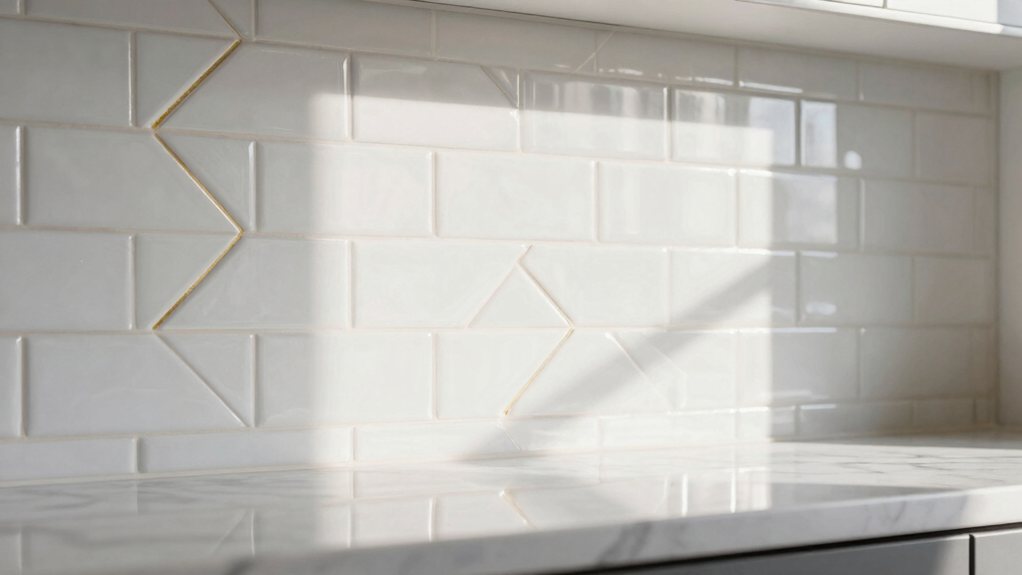
While subway tile has become the go-to choice for kitchen backsplashes, you don’t have to settle for the same old horizontal brick pattern everyone else has.
There are plenty of creative ways to make this classic tile feel fresh and personal. Try a vertical stack pattern for a clean, modern look that draws the eye upward, or experiment with a herringbone arrangement that adds visual interest without overwhelming your space.
Vertical stacking creates height while herringbone brings movement—both patterns elevate subway tile beyond the ordinary without visual chaos.
You can also play with contrasting grout to highlight your chosen pattern and create dimension.
Another fun approach involves alternating orientation between sections, mixing horizontal and vertical layouts to create subtle zones. These simple tweaks transform basic subway tile into something uniquely yours, proving that classic materials can still surprise you.
Consider using peel-and-stick tile for an easy, durable installation that updates your space quickly.
If you’re ready to kick your backsplash up a notch, herringbone and chevron patterns create eye-catching movement that transforms a flat wall into a focal point.
While these two patterns look similar at first glance, they’re actually installed quite differently—herringbone uses rectangular tiles arranged at right angles, while chevron requires specially cut tiles that meet at perfect points.
The good news is that once you understand the installation techniques and choose the right tiles for your pattern, you’ll end up with a kitchen backsplash that looks anything but basic.
Consider using a bathroom renovation tile kit to streamline tile selection and ensure coordinated materials for your project.
Since herringbone patterns have graced European floors and walls for centuries, it’s no wonder they’ve become a go-to choice for homeowners who want their kitchen backsplash to feel both timeless and fresh.
You’ll need to nail your substrate preparation first—ensure your wall’s clean, level, and primed.
Any bumps or dips will throw off those precise angles you’re aiming for.
The back buttering technique becomes your best friend here.
You’ll spread thin-set on both the wall and tile backs, which gives you extra hold and prevents those dreaded hollow spots.
Start from your centerline and work outward, keeping those 45-degree angles consistent.
It’s meticulous work, sure, but watching that zigzag pattern take shape makes every careful cut worthwhile.
For any drywall imperfections before tiling, consider using a professional drywall repair kit to achieve a smooth surface.
How can two patterns look so similar yet create completely different vibes in your kitchen? The key lies in their Historical Origins and construction methods.
Herringbone creates a broken zigzag, while chevron forms continuous V-shapes that produce a striking Optical Illusion of height.
Here’s what sets them apart:
You’ll notice chevron draws your eye upward more dramatically, making it perfect for low ceilings. Many kitchens also benefit from a kitchen storage cabinet organizer to maximize space and complement backsplash designs.
When you’re ready to bring these dynamic patterns to life, your tile selection becomes the make-or-break decision.
You’ll want materials that can handle the complexity of herringbone or chevron layouts without cracking under pressure—literally.
That’s where porcelain durability shines, giving you a backsplash that’ll stand up to daily kitchen chaos for years.
Subway tiles remain the classic go-to for these patterns, though you’re not limited to that traditional shape.
Consider glazed options if you want extra shine and easy cleanup, especially near your cooking zones.
Smaller tiles, typically 2×4 or 3×6 inches, work through the pattern’s angles seamlessly.
Just remember: intricate patterns already create visual interest, so you don’t need wild colors to make an impact.
While most kitchen backsplashes follow the traditional horizontal tile pattern that’s been around for decades, vertical stacked layouts flip that expectation on its head and create something unexpectedly fresh.
You’re establishing a vertical rhythm that draws the eye upward, making your kitchen feel taller than it actually is. This scale illusion works particularly well in spaces with lower ceilings.
Here’s what makes vertical layouts so effective:
You’re fundamentally giving your kitchen an architectural facelift that’s both bold and surprisingly subtle at the same time. You can also pair vertical backsplashes with a luxury kitchen faucet to tie together high-end finishes.
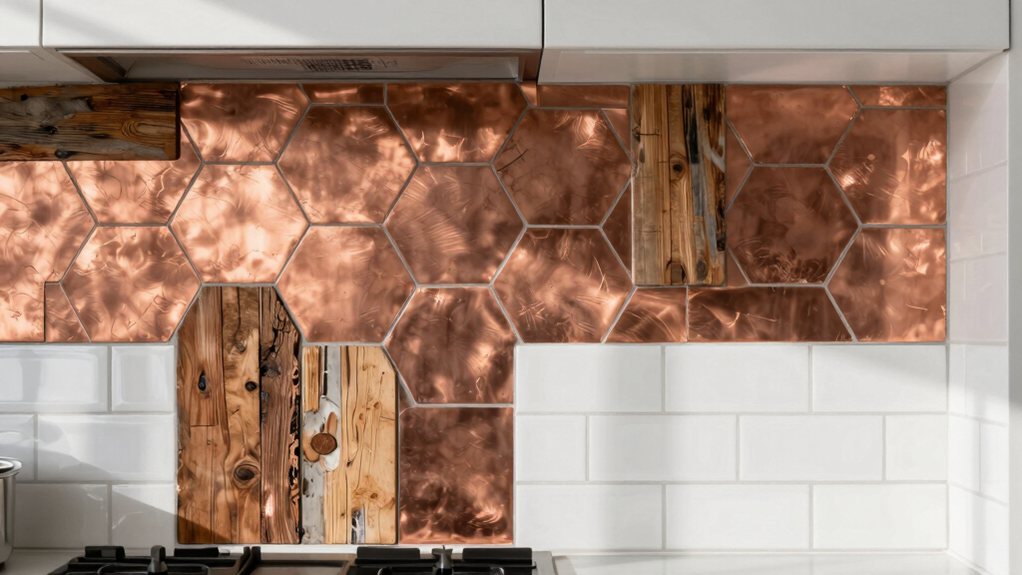
When you’re ready to take your backsplash from flat to fascinating, mixing materials is your secret weapon.
You can pair the sleek shimmer of glass tiles with the rustic texture of natural stone, or layer metallic accents over ceramic to create a look that’s anything but boring.
This approach doesn’t just add visual interest—it transforms your kitchen wall into a three-dimensional masterpiece that catches light, creates shadows, and gives your space real personality.
Consider coordinating your backsplash with luxury home decor pieces to elevate the room’s overall aesthetic.
Mixing stone and glass in your backsplash creates a stunning visual effect that’s hard to achieve with just one material.
The contrast between natural stone’s texture and glass’s glossy shine adds incredible depth to your kitchen walls.
When planning your design, consider these practical combinations:
Remember that proper sealer selection matters for your stone elements, protecting them from moisture and stains.
Glass tiles require minimal maintenance, making them perfect partners for more porous stone materials.
This combination lets you enjoy beauty without constant upkeep worries.
Also consider coordinating adjacent areas like bathroom vanity cabinet selections if you’re updating multiple rooms.
Because metal brings an industrial edge that ceramic and porcelain can’t match, layering these materials together creates a backsplash with serious personality.
You’ll want to think about how metal strips can frame your tile sections, acting as both edge trim and visual breaks that define different zones. Copper and brass develop a natural patina over time, which adds character—though patina care requires occasional cleaning if you prefer that shiny, just-installed look.
Try alternating horizontal bands of subway tile with thin metal strips, or create a grid pattern using metal as dividers between tile squares. Stainless steel works brilliantly in modern kitchens, while brushed bronze adds warmth to traditional spaces. The dimensional depth you’ll achieve makes your backsplash feel custom and intentional rather than flat.
Consider coordinating metal choices with console table hardware to create cohesive room accents.
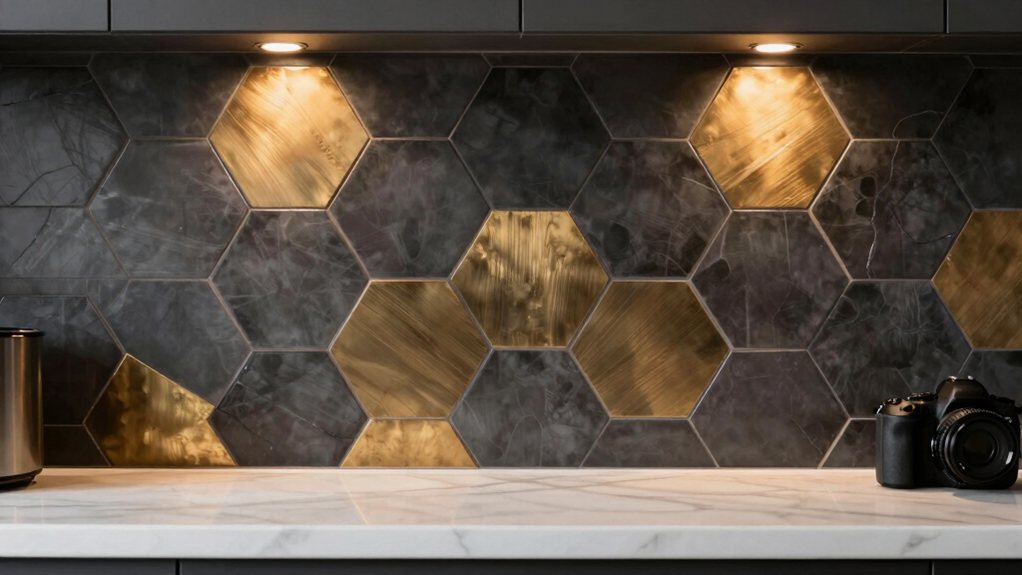
Transforming your kitchen with geometric and hexagonal tiles creates an instant focal point that’s impossible to ignore.
These angular designs bring energy and movement to your walls, and they’re surprisingly versatile for different styles.
Here’s what makes these patterns work:
* Lighting Effects play beautifully across angled surfaces, creating shadows and depth throughout the day
You’ll find hexagonal tiles come in everything from classic subway size to oversized statement pieces.
Try clustering different sizes together, or keep it uniform for a cleaner look.
Either way, you’re creating something memorable. Smart kitchens can be enhanced by Smart kitchen lighting systems that accentuate tile angles and texture.
How do you match your backsplash layout to the kitchen you’ve already got? Start by considering your overall design vibe.
Traditional kitchens shine with classic subway tiles in straight or brick patterns, while modern spaces love geometric layouts that create visual punch.
Color psychology plays a huge role here—cool blues and greens bring calm energy, perfect for busy cooking spaces, while warm terracotta tones add cozy comfort.
Don’t forget architectural coherence; your backsplash should complement existing elements like cabinetry lines and countertop edges.
If you’ve got ornate details throughout, intricate mosaic patterns feel right at home. Minimal kitchens? Stick with clean, linear arrangements.
Your backsplash isn’t just decoration—it’s the thread that ties your whole kitchen story together. Consider practical alternatives like peel stick wallpaper for easy installation, removal, and seasonal updates.
When you’re working with a tight budget, smart layout choices can make inexpensive materials look like a million bucks.
Strategic layout choices transform budget-friendly materials into high-end looks without spending more on expensive tiles.
Peel stick tiles have come a long way, and arranging them in unexpected patterns instantly enhances their look.
You don’t need pricey materials to create stunning visual impact.
Consider these budget-savvy approaches:
The secret’s in the installation, not the price tag.
A $3 tile arranged thoughtfully beats a $12 tile slapped up randomly.
Focus your energy on precise spacing and creative arrangements, and you’ll achieve that custom look without the custom price.
Where should your bold, eye-catching pattern actually go? You’ve got two solid options: behind the stove only or across your entire wall.
If you’re playing it safe, concentrate statement tiles behind your range—it creates instant focal balance without overwhelming your space. This works perfectly when you’ve got limited natural light or busy countertops.
However, running patterns wall-to-wall makes a dramatic impact, especially in open kitchens where you’re craving personality. Just consider your lighting placement first—bold patterns can look muddy in dim corners.
Here’s the deal: smaller kitchens benefit from concentrated pattern zones, while spacious layouts can handle full-wall treatments. Think about what you’ll see daily and what won’t drive you crazy after six months.
Pattern complexity doesn’t just affect how your backsplash looks—it directly hits your wallet and timeline.
When you’re choosing intricate designs, you’re signing up for more labor variables that can make or break your budget.
Here’s what you need to know:
The more complex your pattern, the more hours your installer needs.
That means you’ll pay for their expertise and extra materials.
Smart homeowners factor these costs early, so they’re not shocked when the final bill arrives.
Your backsplash isn’t just about protecting your walls—it’s where function meets personality. Whether you’re drawn to classic subway tiles laid in unexpected patterns or bold geometric designs that steal the show, there’s a layout that’ll match your style and budget. Don’t be afraid to mix materials or go vertical when everyone else goes horizontal. The best backsplash? It’s the one that makes you smile every time you’re cooking up something delicious.