Phone:
(701)814-6992
Physical address:
6296 Donnelly Plaza
Ratkeville, Bahamas.

Phone:
(701)814-6992
Physical address:
6296 Donnelly Plaza
Ratkeville, Bahamas.
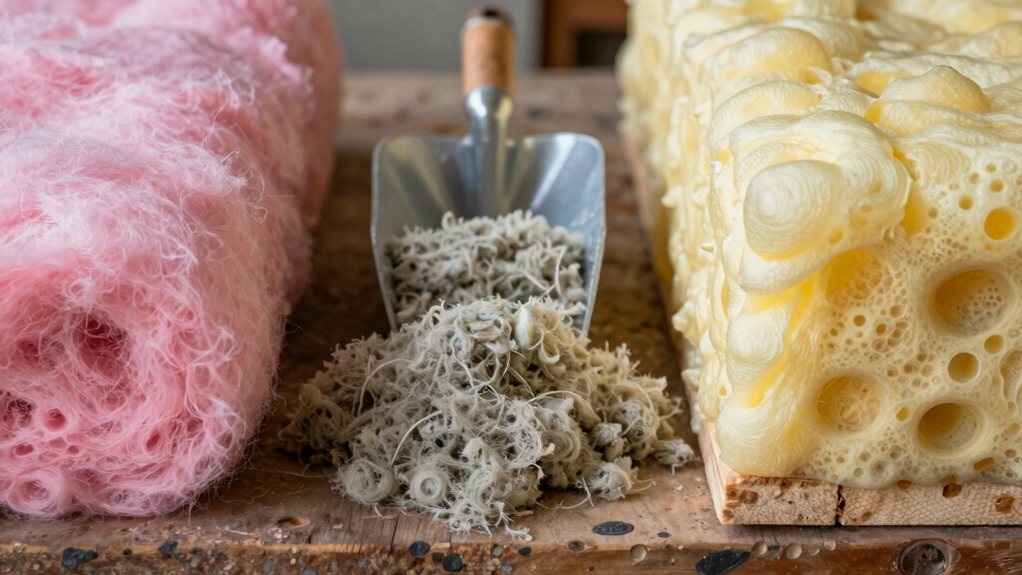
Insulation options like batt, blown, or foam—find your DIY fit for
For your DIY project, batt insulation is your go-to for standard walls—it’s affordable and you can cut it to fit. Blown-in, like cellulose, is fantastic for topping up old attics but usually needs a pro’s gear. Spray foam seals everything shut for top performance, but it’s complex and costly. Your choice really depends on balancing your budget, effort, and the space you’re tackling. Let’s unpack that so you can get started right.
Table of Contents
When you’re tackling your own insulation project and looking for the go-to material that feels familiar, you’ll likely reach for batt insulation—it’s the undisputed DIY standard for straightforward jobs.
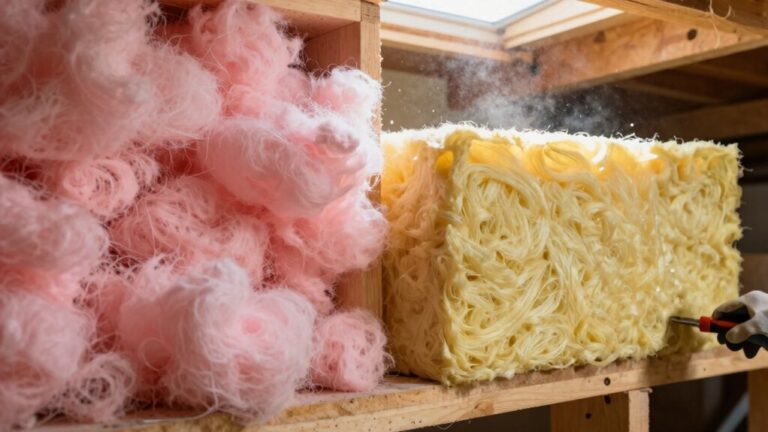
These fiberglass batt insulation products come in convenient pre-cut batts and rolls that fit right into standard 2×4 wall cavities or 2×6 walls.
For those 2×4 spaces, you’re typically looking at R-13 or R-15, while deeper 2×6 walls use R-19 or R-21 batts.
They offer a decent R-value per inch, but squishing them ruins their power.
You can choose faced batts with a built-in vapor barrier or unfaced ones for more flexibility.
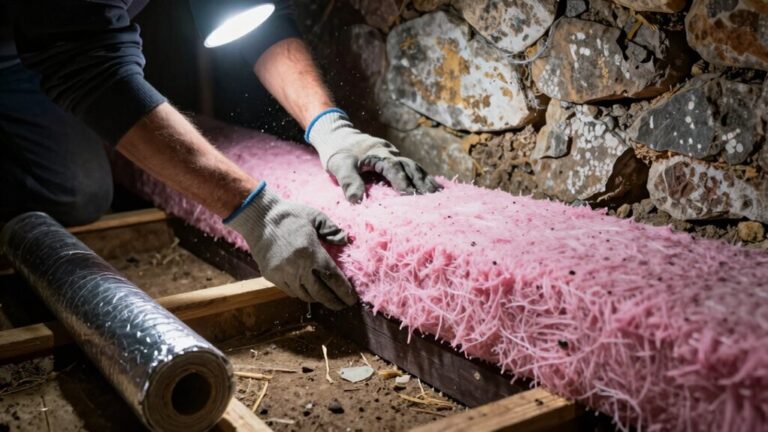
Just remember your PPE—gloves, a mask, and long sleeves—unless you enjoy being itchy!
When installing in basements or other high-moisture areas, consider adding a separate 6 mil vapor barrier for continuous protection.
Since you’ve got the basics down, let’s figure out which insulation fits your specific project—because picking the right material makes all the difference between a cozy home and one that’s still drafty.
For easy, standard walls, fiberglass batts are your affordable, go-to choice.
Tackling an attic? Go with blown-in (loose-fill) cellulose or loose-fill fiberglass; they fill every nook perfectly.
Generally, skip DIY spray foam insulation for big jobs—it’s tricky stuff—but tiny gaps might call for open-cell or closed-cell foam.
No matter what, remember air sealing is step one!
Always check your target R-value for energy savings and verify any needed thermal barrier with local codes.
Matching the material to the space is your golden rule for DIY success.
Also consider replacing old weatherstripping on exterior doors as part of insulation upgrades.
Now that you know how to match insulation to your project, let’s get into the nitty-gritty of blown-in insulation—your secret weapon for filling up those tricky existing walls and attics.
Discover the power of blown-in insulation—your solution for tricky existing walls and attics.
This loose-fill method, using materials like cellulose or fiberglass, is perfect for retrofits where batts won’t fit.
A special machine blows the material into wall cavities and attics, creating a seamless blanket.
To get it right, you should know a few key things:
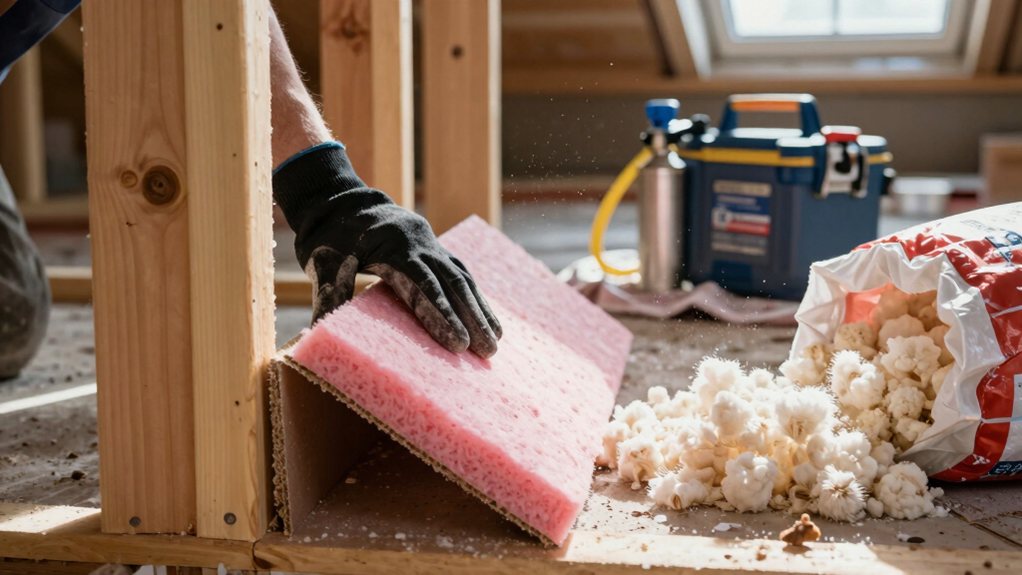
If you’re looking for top-tier thermal performance, spray foam insulation is like the superhero of the home-sealing world, but it does come with a more complex—and costly—origin story.
You’ll choose between open-cell and closed-cell types. Closed-cell offers a higher R-value per inch and acts as a vapor barrier, while open-cell is softer and more breathable. Both provide incredible air-sealing.
However, this power demands professional installation due to tricky chemicals and strict safety gear. Building codes often require a separate thermal barrier, like drywall, for fire safety, adding to the cost.
While the upfront price makes you gulp, the long-term energy savings from a super-tight house can make spray foam a brilliant investment for tricky spots.
Consider hiring a professional to ensure safe handling and compliance, especially when coordinating with a required thermal barrier.
So there you have it. Your choice really depends on your project and your budget, but remember, any good insulation is a fantastic upgrade. You’ll save money on energy bills and feel more comfortable in your own home, which is a win-win. Just take your time, suit up with the right safety gear, and you can tackle this. Your house, and your wallet, will thank you for the effort.