Phone:
(701)814-6992
Physical address:
6296 Donnelly Plaza
Ratkeville, Bahamas.

Phone:
(701)814-6992
Physical address:
6296 Donnelly Plaza
Ratkeville, Bahamas.
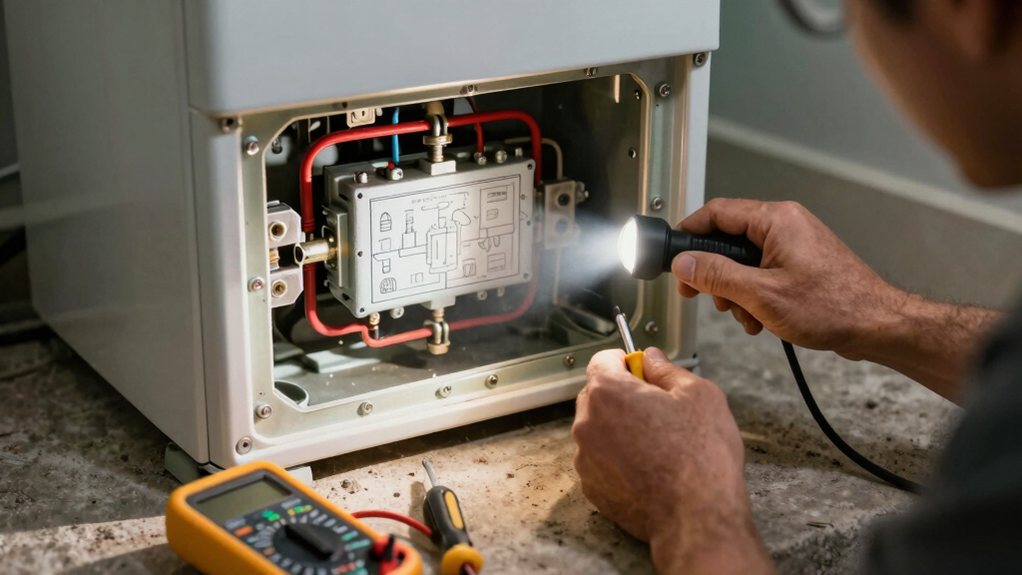
Want to restore your furnace's heat? Learn these simple DIY troubleshooting steps to solve your furnace problems before calling a pro.
First, check that your thermostat’s set to Heat, then verify your furnace has power by flipping its switch and breaker. A clogged air filter can cause shutdowns, so swap it out if it’s dirty. Make sure your gas valve is on, but if you smell rotten eggs, leave immediately and call the gas company. Trying the reset button or cleaning the flame sensor often works—we’ll walk you through the steps.
Table of Contents
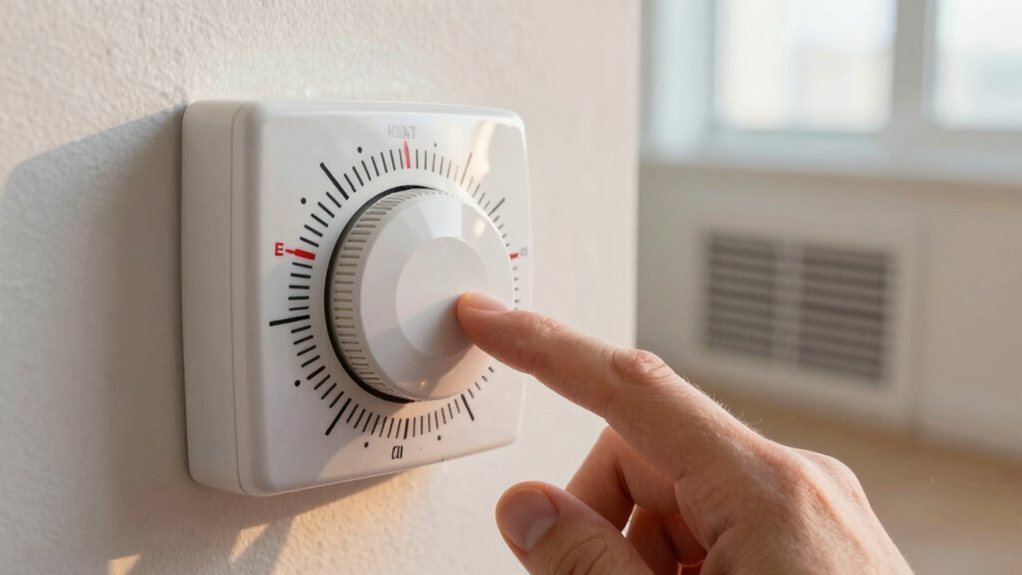
Before you start worrying about major furnace repairs, let’s start with the simplest fix—your thermostat. First, confirm it’s on Heat setting, not Cool or Auto.
Before stressing over furnace repairs, start with the simplest fix—check your thermostat is set to Heat.
Next, check your temperature setpoint; bump it up a few degrees above the current room temp to force a call for heat. If you have a programmable/smart thermostat, make sure it’s not in Hold/Vacation mode, which can override your settings.
After a power loss/blank display, a simple battery replacement can often restore power and programming. For hardwired units, a blank screen might indicate issues with the thermostat wiring.
It’s a bit like checking if your appliance is plugged in—annoyingly simple, but it solves the problem more often than you’d think! Many users integrate their thermostats with a smart home automation system for remote control and scheduling.
After you’ve given your thermostat a good once-over, it’s wise to make sure your furnace is actually getting the power it needs to run—a step that’s just as important as setting the right temperature.
First, locate the furnace power switch on or near the unit—it looks like a light switch—and flip it off, wait ten seconds, and turn it back on. Next, head to your home’s electrical panel and find the circuit breaker for the furnace. If it’s tripped, flip it fully off and then on.
To verify you have line power, listen for a blower hum or check for control board LEDs. Don’t forget fresh thermostat batteries! If there’s still no life, the low-voltage fuse inside the furnace might be blown and need replacement. Consider upgrading to smart home electrical panels to improve monitoring and control of your furnace circuit.
* First, check the air filter.
Slide it out from its cabinet; if you hold it to a light and can’t see through the grime, it’s definitely time for a swap.
Pay attention to the MERV rating; a MERV 6-8 is usually perfect for most home systems.
* Remember, a clogged filter severely restricts airflow, making your furnace work harder and potentially causing it to shut down.
A clean filter is a happy furnace!
Consider upgrading to a whole house air purifier to improve indoor air quality throughout your home.
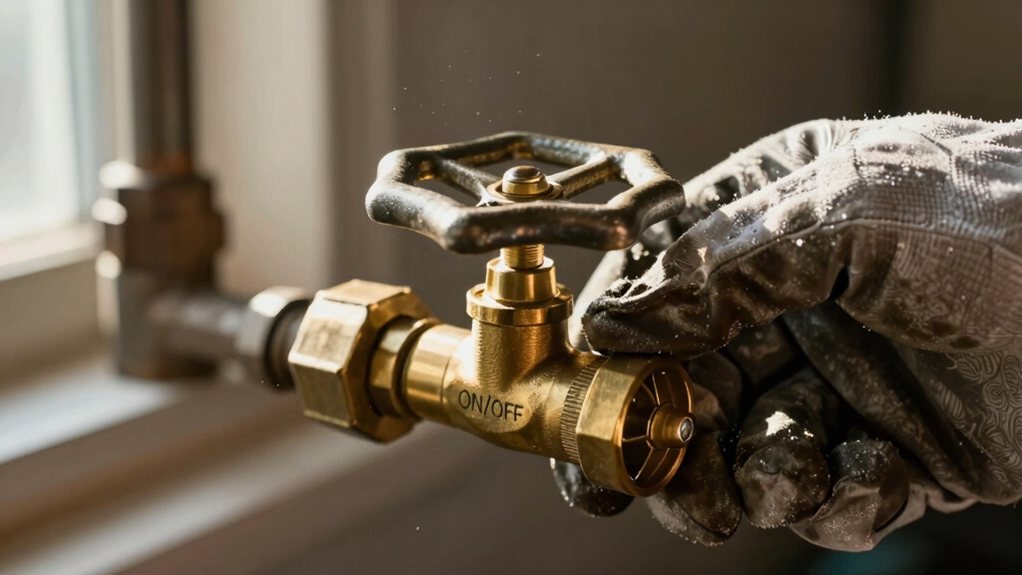
First, check the gas shutoff valve for your furnace, making sure its lever is parallel to the pipe so the gas can flow freely.
If you’re unsure, give your gas stove a quick test to see if it lights, which will tell you if gas is reaching your house.
While you’re at it, be alert for that telltale rotten-egg smell, because if you catch a whiff, it’s time to get everyone out safely and call for help right away.
Consider keeping a professional safety kit on hand when working near gas appliances to protect yourself.
Let’s start with the simplest check—like making sure your phone is plugged in before declaring it’s broken—by confirming your furnace’s gas supply is actually on.
A closed gas shutoff valve is a surprisingly common culprit. Here’s a quick, safe way to check things yourself:
So, you’ve checked the gas valve and it’s definitely on, but maybe you’re catching a whiff of something unusual?
That strong sulfur or rotten egg odor is a serious warning sign of a potential natural gas leak.
If you smell gas, don’t panic, but act immediately.
Your first job is safety: get everyone out of the house.
Avoid flipping any switches or using your phone inside.
Once you’re at a safe distance, call your gas company’s emergency line.
They’re the pros for this.
Remember, gas leaks aren’t a DIY fix.
Even if you’re unsure about the supply valve or hear a hiss, err on the side of caution and let the experts handle it—your safety is the top priority.
If you ever catch a whiff of something that reminds you of rotten eggs or sulfur, it’s crucial to take it seriously right away, because natural gas is intentionally given that strong odor to alert you to a leak. This is a critical safety step, especially when troubleshooting your gas furnace.
If you smell this while checking for issues with the gas, you must act immediately and contact help from outside. Evacuate everyone, avoid flipping any switches, and move far away.
It’s definitely time to call for help. You’ll need professional, certified assistance, so from a safe spot, call your gas company or 911.
Don’t guess with gas—let an HVAC technician handle it. When in doubt, contact the experts. Call us, and we’ll connect you with a pro right away.
Once you’ve safely ruled out any gas odor, you can check a handy little feature on your furnace itself.
Look for a small red reset button, often found on the burner access panel.
This manual reset or rollout switch can trip and shut things down for safety reasons.
It’s like your furnace’s personal circuit breaker switch, reacting to issues like a faulty thermostat or a problem with the ignition system.
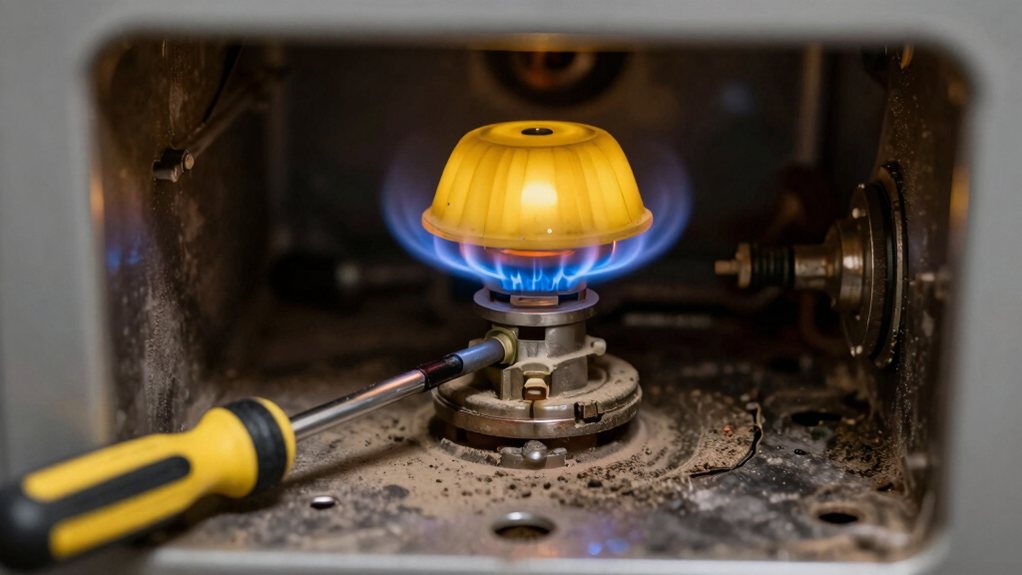
Let’s explore into the heart of your furnace’s starting process by checking its ignition system or pilot light.
On older furnaces, look for that small, steady blue pilot flame.
If it’s out, carefully relight it following your manual’s steps, but call a pro if it won’t stay lit—safety first!
Carefully relight the pilot following your manual, but call a professional if it won’t stay lit—always prioritize safety.
Newer models use electricity to start, with an electronic ignitor.
If you hear the blower but no flame, that ignitor might be faulty.
Often, the culprit is a dirty flame sensor; a quick, gentle cleaning with fine steel wool can work wonders.
For any furnace that won’t turn on, these troubleshooting tips can help, but persistent issues mean it’s time for a professional furnace technician to guarantee efficient and safe operation.
After you’ve checked the furnace’s ignition, your next stop should be the condensate drain pan, especially if you have a high-efficiency furnace.
These modern units produce condensation, and if the pan overflows, a clever little float switch shuts everything down to prevent a waterlogged mess.
Don’t worry, this is a common and often simple fix.
Sometimes, your furnace has problems that are best left to the pros, like when you smell rotten eggs or suspect a gas leak, because that’s a serious safety issue that needs immediate expert attention.
Other times, the trouble is inside, with tricky parts like the ignitor or control board that require special tools and know-how to fix safely.
Calling a technician for these specific situations is the smart move, making sure your home stays warm and safe without the guesswork.
Because you’ve got a nose that can sniff out trouble, you should never ignore the rotten-egg smell of a gas leak.
If your furnace doesn’t turn on, this could be why.
First, diagnose the issue safely. If you smell gas or hear hissing, don’t try to fix it yourself—evacuate and call for help.
There are steps you can take to prevent your furnace from causing a dangerous situation. Prioritize everyone’s safety first. Consider integrating a smart home automation hub to enable remote monitoring and automatic shutoff for safety systems.
While a gas leak is a clear sign to call for help, sometimes your furnace’s problem is more of an internal mystery—like a puzzle you shouldn’t try to solve yourself.
For instance, a failed ignitor can cause a persistent ignition lockout.
A faulty control board or relay might cut power entirely, leaving you in the cold.
If you hear strange noises or get no airflow, your blower motor or its capacitor could be failing.
Most serious is a cracked heat exchanger, a safety hazard needing immediate pro replacement.
Repeated trips of the limit switch are also red flags.
These internal issues require a technician’s skill for safe, correct repair, so know when to hand over the tools.
So, you’ve done your detective work and hopefully your furnace is back in action. If these simple steps didn’t solve it, don’t sweat it—some jobs are just for the pros. Knowing when to call for help is the smartest DIY move of all. Stay warm out there, and remember, a little troubleshooting can save you a chilly evening and maybe even a service call. You’ve got this!