Phone:
(701)814-6992
Physical address:
6296 Donnelly Plaza
Ratkeville, Bahamas.

Phone:
(701)814-6992
Physical address:
6296 Donnelly Plaza
Ratkeville, Bahamas.
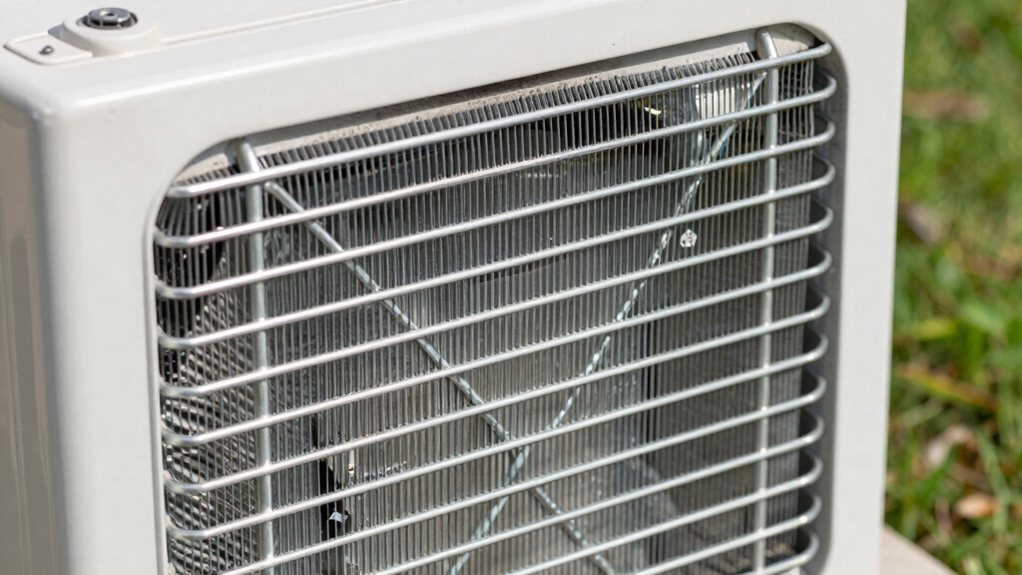
To turbocharge your AC's efficiency by cleaning the condenser coils, discover the simple steps that...
First, you’ll shut off the power for safety. Then, remove loose debris from the outdoor unit and gently brush the fins. Apply a foaming coil cleaner, let it sit for a few minutes to break down the grime, and rinse it all off with your garden hose. This simple wash boosts airflow and cooling power, making your AC run more efficiently and cheaper. The guide below has all the details to get you started.
Table of Contents
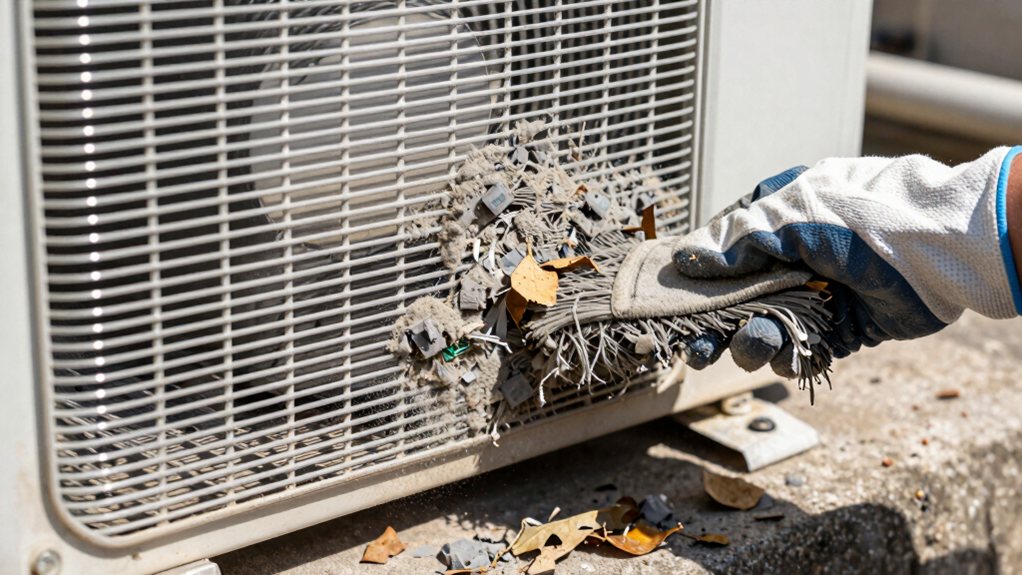
Before we dig into the nitty-gritty of cleaning, let’s talk about what these coils are and why you should care about them.
Your AC’s condenser coil is the outdoor unit’s heart, a clever heat-exchanger that releases your home’s heat into the outside air.
For this heat transfer to work well, it needs good airflow.
When dirt and debris build up, you get dirty coils.
Dirt and debris build-up creates dirty coils, suffocating your AC’s efficiency and straining its system.
This layer acts like a winter coat in July, smothering efficiency.
Your system strains, compressor workload skyrockets, and cooling cycles drag on.
The result? Soaring energy bills and a stressed-out AC.
Simple, regular cleaning as part of your maintenance routine reverses this, saving you money and keeping your cool companion happy for years. For heavy-duty cleaning options and related equipment, see our listings for commercial-grade pressure washer products.
You can often spot a dirty condenser coil just by looking for a visible layer of grime, dust, or that chalky white residue on the fins.
If your house isn’t cooling down like it used to, or your energy bills are creeping up, your system is likely straining against that buildup.
These are clear signs it’s time for a cleaning, so you can get back to efficient, cool comfort.
Consider installing a whole house air purifier to improve indoor air quality throughout your home.
While it’s natural for your outdoor AC unit to gather a little dust, when those once-silver condenser coils start looking like they’ve been dusted with cocoa powder, it’s a clear sign it’s time for a cleaning.
Your condenser coil cleaning is essential because all that visible dirt and grime acts like a winter coat, trapping heat.
A Clean Condenser is a happy one!
Since the coils are exposed, they collect more than just dust. This debris makes your system work harder, leading to reduced cooling capacity.
Watch for these three common culprits:
For tougher buildup, consider using an electric pressure washer designed for commercial use to aid cleaning.
If your AC is blowing air that’s more lukewarm than arctic blast, it’s a classic clue that your condenser coils might be dressed in a thick coat of dirt. This reduced heat transfer means your system struggles to hit your set temperature.
You’ll notice decreased cooling capacity as it runs constantly with only short breaks. Those dirty coils also cause restricted airflow, forcing the compressor working harder and leading to higher energy bills.
Plus, your AC’s dehumidification takes a hit, leaving your home feeling clammy. It’s a frustrating cycle of warm air and high costs. The good news is that cleaning the AC condenser can solve this. Giving those AC coils some TLC restores performance and saves you money. For heavy buildup, consider using a pressure washer electric to remove debris more effectively.
Here are three key indicators your coils need attention:
Simple maintenance prevents strain.
Keeping coils clean and changing dirty air filters helps your machine breathe easy.
How exactly do you gather the right gear for cleaning your AC’s condenser coils without causing any damage?
First, grab your protective gloves and safety goggles—safety is no joke.
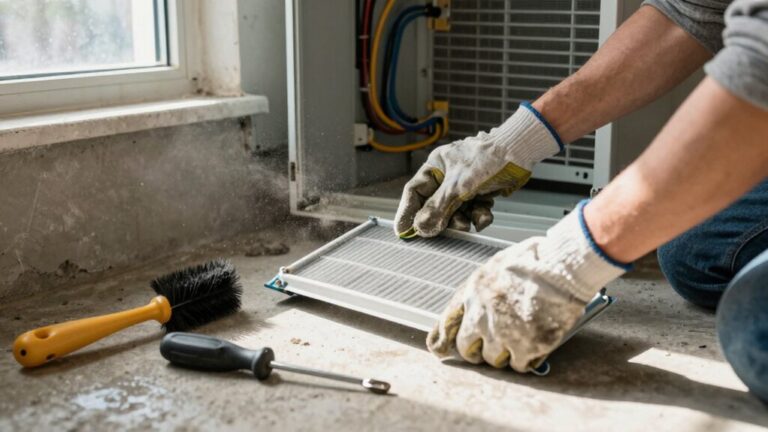
You’ll need a screwdriver or nut driver to remove the access panel.
For cleaning, arm yourself with a soft-bristle brush and a fin comb to gently straighten any bent fins.
A shop vacuum with a soft attachment is perfect for sucking up loose debris like leaves and dirt before you wash.
When it’s time for the deep clean, skip the pressure washer; a garden hose with a gentle spray is your friend.
For cleaner, choose a foaming coil cleaner for tough grime, a non-foaming cleaner for a quicker job, or just mild detergent for light maintenance.
For other outdoor maintenance tasks, consider specialized equipment such as a gutter cleaning pressure washer designed for exterior use.
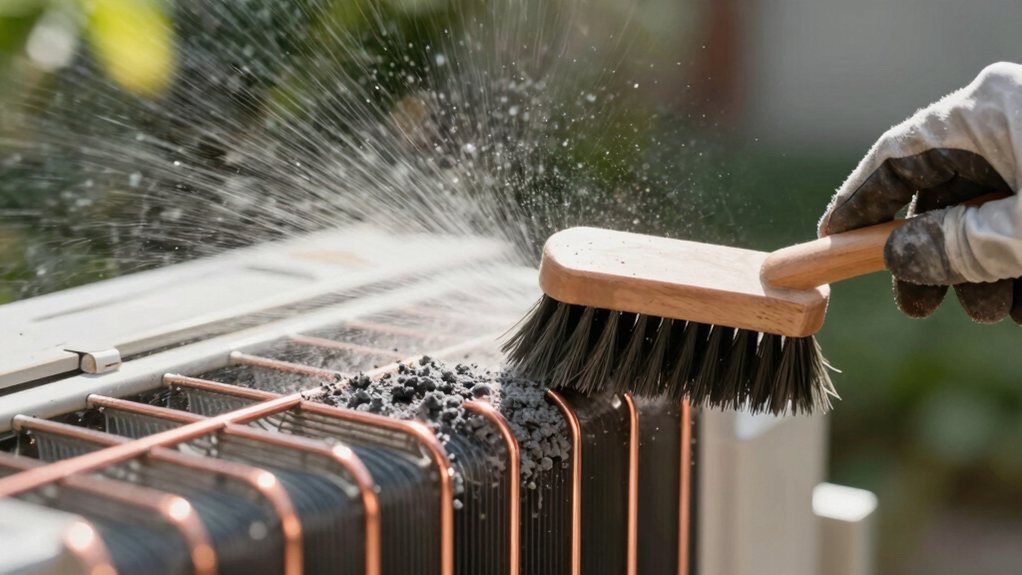
First, you’ll shut off the power for safety and pop off the access panels, which is much easier than it sounds.
Next, you’ll apply your coil cleaner, let it do its foamy magic, and then give everything a gentle rinse with your garden hose.
Finally, put it all back together, turn the power on, and enjoy the satisfying hum of a cleaner, more efficient AC unit.
For stubborn buildups, consider renting a Electric pressure washer commercial to speed up the job.
Before you can get your air conditioner’s condenser coils sparkling clean, it’s absolutely essential to make sure the power is completely off, because dealing with electricity and moving parts isn’t something you want to guess about.
Your safety checklist is simple but non-negotiable.
1. Isolate the power completely. Head inside and shut off power at your thermostat, setting it to OFF.
Then, go to your home’s service panel and turn off the dedicated AC circuit breaker.
For extra safety, also flip the disconnect switch located at the outdoor unit.
2. Verify and secure the power is off. Use a non-contact voltage tester to check the unit’s terminals—this verify absence of voltage step is your final proof.
Place a lockout/tagout on the breaker so no one accidentally restores power while you’re working.
3. Gear up and work smart. Always wear safety goggles and chemical-resistant gloves when using cleaners.
Be careful to avoid spraying electrical components directly with water, and remember that capacitors can hold a charge, so allow time for them to discharge safely.
Consider whether upgrading to smart home electrical panels could improve control and safety of your home’s power distribution.
Now that you’ve got the power safely off and your goggles are on, it’s time to roll up your sleeves and tackle the grime on those coils—think of it as giving your AC a revitalizing spa day.
Grab a foaming coil cleaner; it really gets in there. Apply liberally to the dirty side and let it sit for the recommended dwell time, usually 5-15 minutes, to break down the yuck.
Then, rinse thoroughly with low-pressure water from your garden hose.
Always spray from the clean side toward the dirty side (inside-out), or top-down if you can’t get inside. Never use a pressure washer; you’ll bend the delicate fins and cause more trouble. A gentle, patient rinse makes all the difference. Commercial kitchens rely on commercial kitchen cleaning equipment to maintain cleanliness and safety.
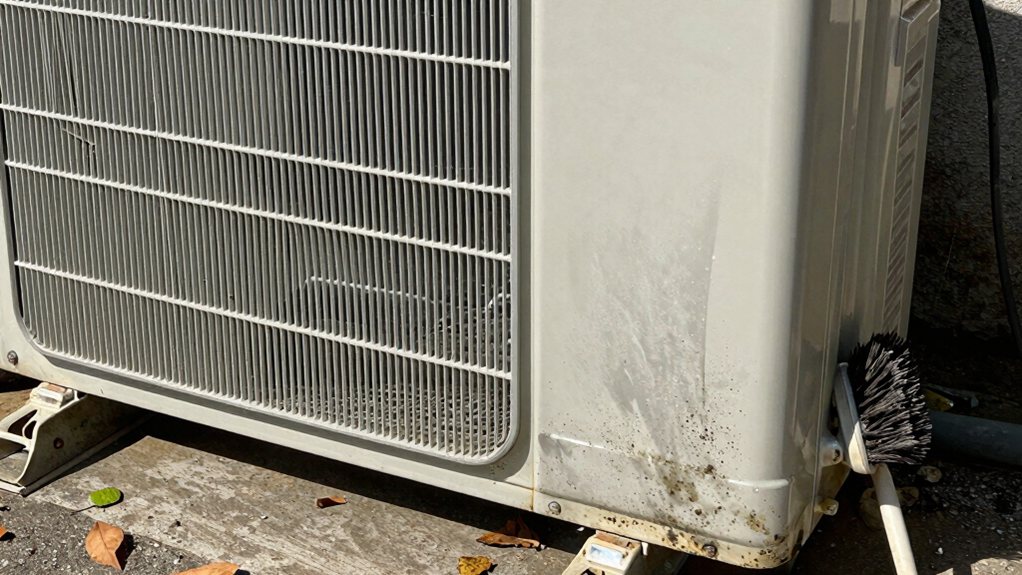
Here’s a quick guide:
While you can certainly tackle a lot of AC maintenance yourself, there are times when calling in a pro is the smartest move for your wallet and your peace of mind.
You should hire a professional at least yearly for a thorough condenser coil inspection.
More importantly, call a technician immediately if you spot warning signs like reduced cooling, higher energy bills, freezing evaporator coils, or unusual noises—these often point to dirty coils or other issues.
For commercial systems or units in dusty environments, schedule service several times a year, as grime builds up fast.
Sometimes, a professional coil cleaning is simply the safest, most cost-effective choice, saving you from bigger headaches (and bills) down the road.
For facilities that generate significant debris, investing in a professional dust collection system can reduce coil contamination and maintenance frequency.
So, you’ve learned the basics of cleaning your AC coils, and that’s a big step! Keeping them clean is a simple way to save money and avoid sweating through the summer. Remember, it’s a quick chore you can do yourself, but don’t hesitate to call a pro if you’re ever unsure. A little maintenance now means a cooler, happier home later, and who doesn’t want that?