Phone:
(701)814-6992
Physical address:
6296 Donnelly Plaza
Ratkeville, Bahamas.

Phone:
(701)814-6992
Physical address:
6296 Donnelly Plaza
Ratkeville, Bahamas.
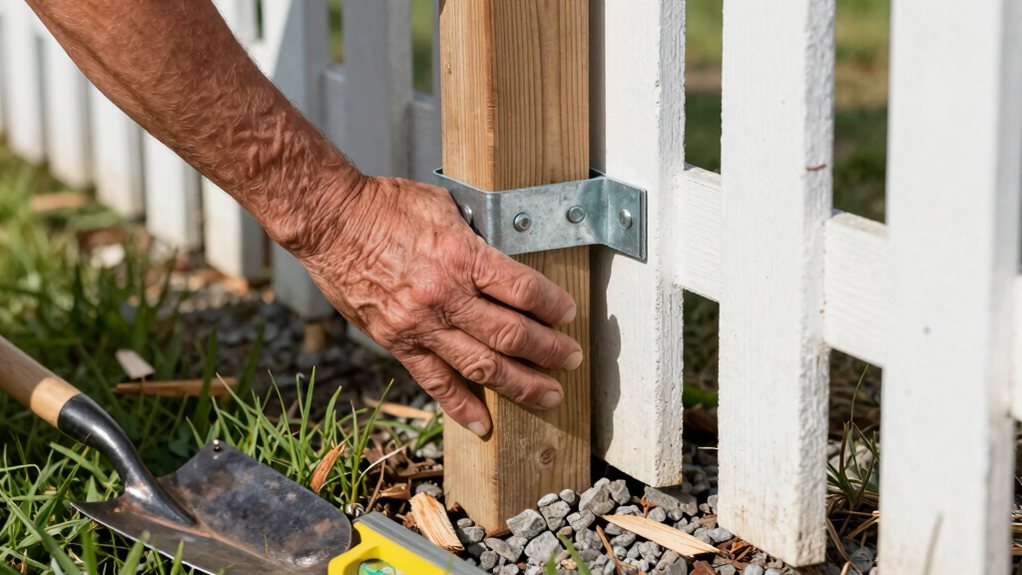
Grab these quick DIY fixes for wobbly fence posts to secure them fast—discover the simple trick that saves your fence.
First, figure out why your post is wobbly—check for rotten wood, loose soil, or a broken concrete base. You can brace it fast with a scrap wood triangle and ratchet straps for instant support. For a firmer fix, compact gravel around the base or reset the post in fresh concrete. Learning the right method will save your afternoon and keep your fence standing tall.
Table of Contents
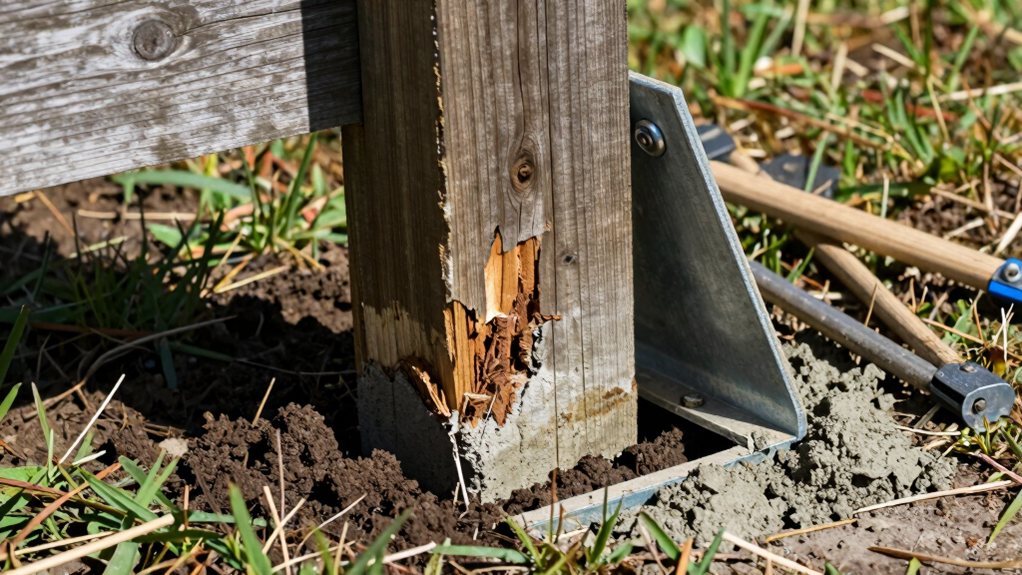
So, you’ve got a wobbly fence post—what’s really going on?
First, inspect for rot indicators like soft, spongy, or crumbly wood.
Insect infestation, such as termite tunnels, can also weaken the post from the inside out.
Give it a solid wiggle to see if it’s moving in loose, sandy soil that’s lost its grip.
Alternatively, the concrete footing might be cracked or shattered, especially after freeze-thaw cycles.
Don’t just guess; knowing the exact cause saves you time and effort.
A post rotting at the base needs different care than one just sitting in loose dirt.
Identifying the villain—rot, soil, or concrete—is your essential first step to a lasting fix.
For stubborn posts, renting a fence post driver can save time and reduce strain.
Bracing a wobbly fence post gives you a surprisingly sturdy fix without ever touching a shovel. It’s perfect when the post is solid but just loose in its hole.
Grab a sturdy piece of scrap 2×4 to use as a timber brace. Position it at a 45-degree angle from the post out to the ground, forming a triangle for serious support.
Now, secure it tightly using heavy-duty ratchet straps. Cinch one strap around the post and the top of your brace, and another near the ground anchor. Crank those straps until everything is gloriously rigid. You’ll be amazed at how this simple, hardware-store trip solves the wobble, buying you years of extra service with zero digging. For quick repairs, having a deck building tools kit on hand can speed the job.
While bracing tackles the wobble from above, you can also give that loose post a firm handshake from below by tightening up the soil around it. If your post is just a bit loose, you don’t need to pull it out entirely. Instead, dig around the base to create a narrow trench.
Now, pour in a bag of gravel, tamping it down firmly as you go. This gravel compaction locks the post into place like a sturdy anchor.
For an even better fix, use a layered drainage approach: add a few inches of gravel, then a layer of soil, and repeat. This creates a solid, well-draining base that resists frost heave and future wobbles, saving you from a future headache.
For quicker, more uniform compaction on larger jobs consider using a plate compactor to speed up the process and achieve professional results.
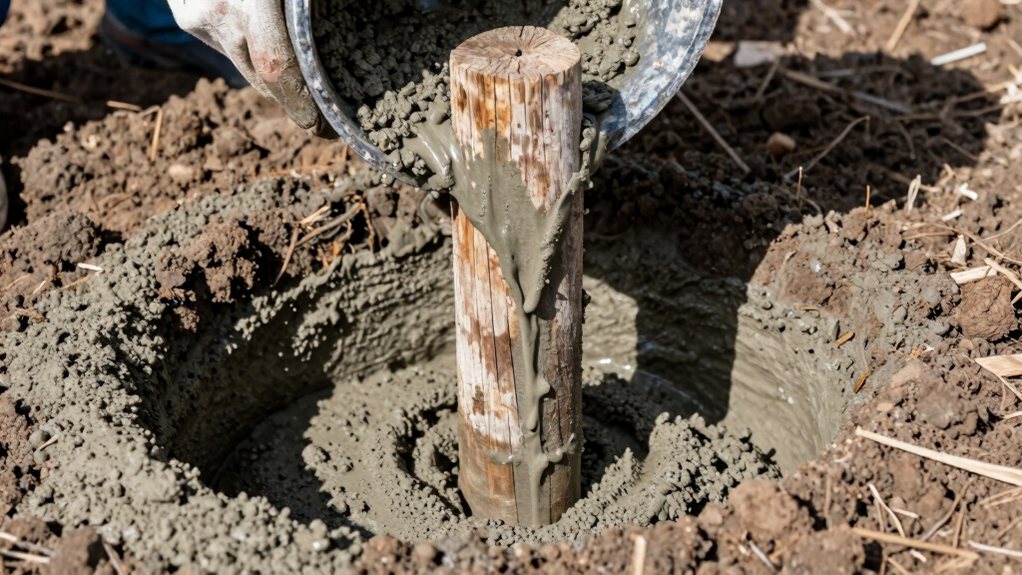
Sometimes a loose fence post needs more than a quick fix; it needs a brand-new foundation that’ll stand strong for years to come.
Start by carefully digging out the old post and concrete. For your new mix, pay attention to the mixing ratios on the concrete bag—usually a simple one-part cement to two-parts sand to three-parts gravel combo works great.
Add water slowly until it’s like thick oatmeal. Pour the concrete into your hole, making sure the post is perfectly plumb.
Now, the hardest part is patience. The curing time is essential; let it set undisturbed for at least 24-48 hours before attaching any fence panels. Trust me, this bit of waiting pays off with a rock-solid post that won’t wiggle again.
Also, double-check the mixing ratios on premixed bags and follow proper curing practices to ensure the concrete achieves full strength.
If your fence post is more than just a little wobbly—think leaning like the Tower of Pisa or rotting away at the base— it’s probably time for a full replacement, rather than merely a repair.
First, carefully remove the old post and clear the hole.
Now, you get a fresh start.
Choose materials wisely; a pressure-treated wood or a sturdy composite post will last for years.
Don’t just eyeball it—take proper measurements for the new post’s depth and height.
You’ll want about a third of its length buried.
Set it in fresh concrete, use a level to confirm it’s perfectly plumb, and hold it steady until the mix sets.
It’s a solid afternoon’s work, but your fence will stand tall and proud again.
For nearby landscaping, consider planting in cedar planter boxes to match the fence aesthetics.
Now that your fence posts are sturdy, let’s talk about keeping them that way for the long haul.
Think of your fence like a car; it needs simple check-ups to run seamlessly.
You should perform regular hardware checks, tightening any loose screws or nails before they cause a bigger wobble.
Don’t forget about paint protection, either.
A fresh coat every few years acts like sunscreen for your wood, shielding it from sun and rain.
It’s a boring chore, but you’ll thank yourself later.
Just set aside an afternoon each spring to walk the line, give things a once-over, and maybe listen to some good music.
This easy habit saves you from major headaches—and expensive repairs—down the road. Consider investing in quality deck staining equipment to make the job faster and more durable.
So, you’ve got a handle on those wobbly posts now! Whether you braced it, packed some gravel, or poured new concrete, you’ve saved yourself time and money. Remember, a little check-up now and then keeps small issues from becoming big headaches. Your fence is more than just wood and wire; it’s your boundary and your peace of mind. Enjoy your sturdy, secure yard—you’ve earned it!