Phone:
(701)814-6992
Physical address:
6296 Donnelly Plaza
Ratkeville, Bahamas.

Phone:
(701)814-6992
Physical address:
6296 Donnelly Plaza
Ratkeville, Bahamas.
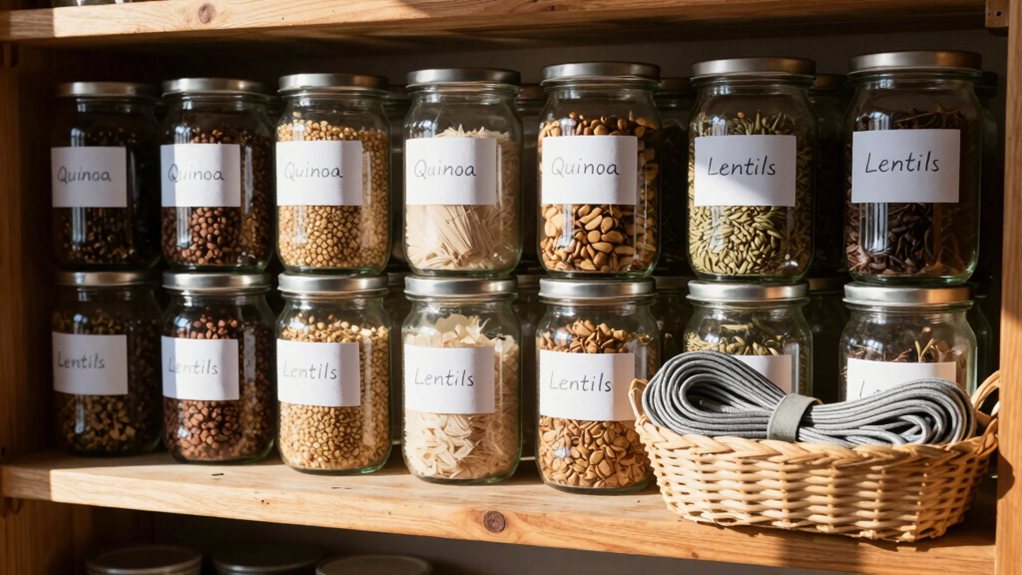
Clear labels turn cluttered DIY storage into a functional map, saving you time and sanity—discover the systems that make everything finally findable.
Transform your cluttered DIY storage with clear labels. They act like a map, saving you time and sanity by showing you exactly where everything lives. For bins and shelves, use durable, high-contrast labels that can stand up to shuffling and humidity. Choosing between handwritten charm, printed polish, or digital smart systems depends on your project. Stick with us to achieve a truly organized space you’ll love using every day.
Table of Contents
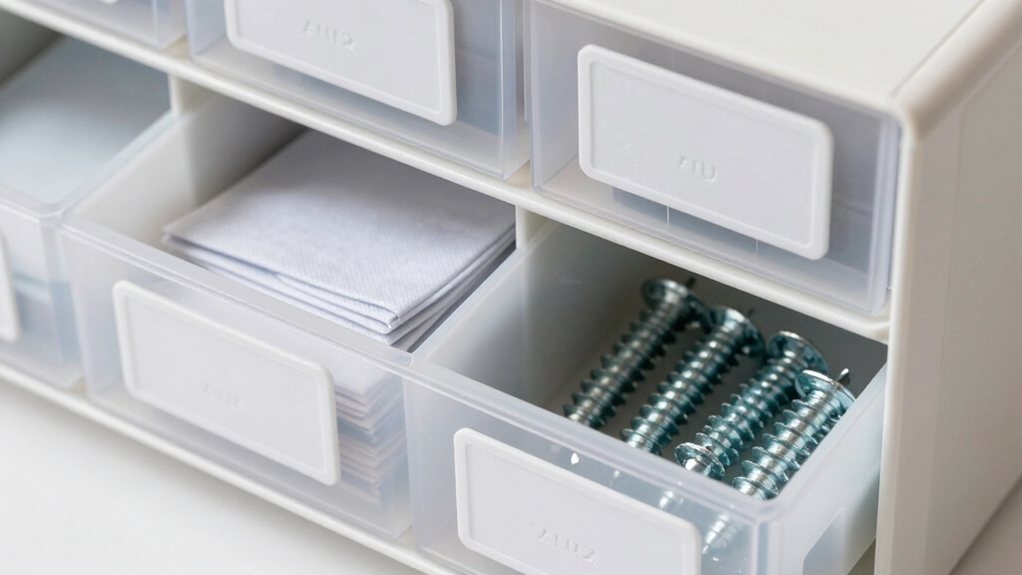
Ever wonder why, after all that effort organizing, you still can’t find anything in your newly sorted storage? The culprit is usually missing labels.
Without them, you face decision fatigue every time you open a bin, wasting mental energy guessing what’s inside. You’ll end up rummaging through multiple containers, which defeats the whole purpose.
This chaos leads directly to repeated purchases because you can’t locate the tape, batteries, or holiday decorations you already own. It’s frustrating and expensive!
A clear labeling system acts as a simple map, instantly telling you where everything lives. It saves your sanity, your time, and your wallet, transforming that DIY project from a pretty pile of bins into a system that actually works. Also, include information about weight capacity on labels to prevent overloading shelves and protect your storage system.
Now that you’re convinced labels are essential, you’ll want to make sure they stick around for the long haul, because a label that fades or falls off is about as useful as a chocolate teapot.
The secret is in two things: adhesive technology and surface compatibility.
Think of adhesive as the label’s handshake with your bin; it needs to be strong and permanent.
A weak adhesive will simply let go.
Surface compatibility is just as critical.
You can’t use the same label on a dusty cardboard box, a slick plastic tote, and a cold glass jar.
You must match the label material and adhesive to what you’re sticking it on.
Get this duo right, and your labels will survive years of shuffling and searching.
Also, environmental factors like humidity above 70% and temperature swings can weaken label adhesives over time.
Choosing between handwritten, printed, and digital labels is a fun part of the organizing process, and each style has its own perks.
Handwritten labels add a personal touch, printed ones look super clean, and digital options are wonderfully flexible.
Let’s look at the advantages of each so you can pick the best fit for your space. A well-designed pantry organization system cabinet can tie your labeling choices together for a cohesive, functional pantry.
You might often think printed or digital labels are the only way to go, but don’t overlook the humble charm and surprising benefits of handwritten ones.
First, they’ve a unique personalized charm that makes your storage system feel truly yours. Your handwriting adds character that a sterile printed font just can’t match.
Second, they offer no tech accessibility. You don’t need a printer, ink, or a charged device; just grab a marker and go. This makes them perfect for last-minute organizing or if you’re in a creative flow.
They’re also wonderfully forgiving—you can change your mind and rewrite a label in seconds without any fuss. Sometimes, the simplest solution is the most effective and endearing one.
Consider investing in professional tool storage systems to pair durable, purpose-built storage with your handwritten labeling for long-term organization.
While handwritten labels have their cozy appeal, printed labels bring a different set of strengths to your organizing projects. Their crisp, uniform look makes everything instantly findable, which is a lifesaver when you’re digging for that one craft supply.
You also access cool tech features like barcode integration, letting you track inventory with a quick phone scan—no more guessing what’s in the mystery bin. Many companies now offer sustainable materials, so you can organize your life without cluttering the planet.
It’s a professional, durable system that saves you time and sanity. Sure, it requires a printer and some setup, but for zones you access daily, that upfront effort pays off in effortless order every single time. A smart choice for long-term organization is a professional label maker system that combines durability, consistency, and tech features.
Ever wonder if there’s a label system that can change on a whim without you lifting a marker? That’s the magic of digital labels. Using a simple app, you can design, print, and update tags from your phone in seconds.
The real power, though, is in organization. With cloud access, your entire home inventory syncs across devices, so you’ll never lose your system. Some apps even offer inventory analytics, showing you what you use most and what’s just collecting dust.
It’s like having a personal organizer in your pocket. While it requires a bit of tech comfort, the payoff in effortless adaptability is huge, making it the smart choice for a truly dynamic storage space. A related product to consider is the smart home automation hub, which can integrate label-driven inventory data with other connected devices for smoother management.

Often, it’s tempting to grab a marker and scribble a label for that quick organizing project. For simple, temporary systems, like sorting holiday decor or a weekend garage clean-out, handwritten tags are perfectly functional.
They save you the fuss of printers and software, letting you adapt instantly. Just use a bold, permanent pen on masking tape for clarity.
While this isn’t the place for hand lettering workshops or crafting personalized gift tags, a little neatness goes a long way. Your future self will thank you for legible notes! Consider adding a kitchen storage cabinet organizer to maximize space.
Moving from the simplicity of handwritten tags, you might find yourself wanting a cleaner, more durable system for the spots you use every day. That’s where a label maker shines, giving your bins and boxes a perfectly polished look.
Label makers transform daily storage from simple to polished, creating a durable and organized system.
It feels official and makes finding things a snap. To really enhance your system, consider these three details:
Consider selecting items from the Luxury Closet Organization System that emphasize a cohesive closet organization system aesthetic.
How can you take your labeling to the next level once a handheld label maker feels a bit too limiting? You step into the world of digital tools, where you can design and print sheets of beautiful, uniform labels from your computer. This is perfect for tackling an entire storage room at once. You can even use apps to manage your label archives, so you never lose a design.
For a shared household space, set up user permissions in a shared folder so roommates or family can only edit certain files—no accidental “miscellaneous” renaming! Explore basic workflow automation too, like templates that auto-fill dates for seasonal bins. It sounds fancy, but it’s just about making the process more seamless so you can get back to enjoying your perfectly organized home. Consider outfitting your space with a premium garage organization system for a cohesive, durable solution.
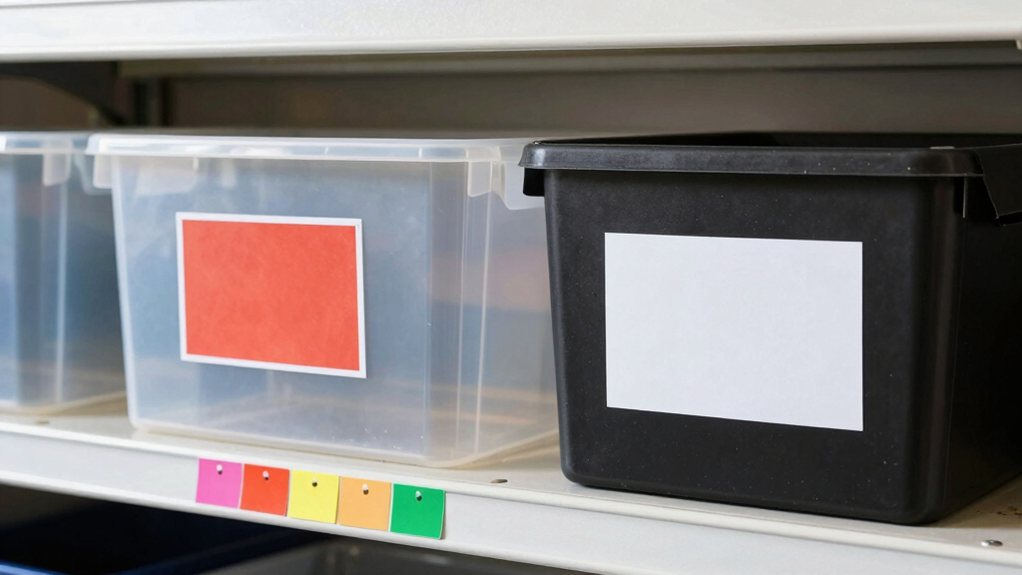
Now that you’ve got your digital tools humming along, you’ll want to make sure your labels actually work on whatever you’re sticking them to—because slapping the same label on a clear bin and a dark cardboard box isn’t always a one-size-fits-all solution.
You need a strategy.
Think about ambient contrast; a white label disappears on a light shelf, so use a dark one instead.
For opaque boxes, add tactile tabs you can feel without looking, making them super easy to find by touch alone.
Consider investing in a craft storage cabinet system to centralize and protect your supplies.
So, you’ve got all your bins, boxes, and shelves perfectly prepped—but what good is that if your labeling system falls apart after a week? The secret isn’t just pretty labels; it’s building a system you’ll actually maintain.
Start by creating simple habit incentives. Promise yourself a small reward, like a favorite coffee, after you successfully label a new batch of items.
Next, get family buy in. Make it a fun weekend project where everyone labels their own stuff, using colors or pictures for kids.
When the whole team understands and contributes, everyone is more likely to put things back correctly. This turns labeling from a chore into a shared, sustainable practice that keeps your space organized for good.
Have you ever gone to find something in your neatly labeled storage, only to discover you can’t read the faded scribble?
You might be using permanent markers on containers you’ll reuse, or writing vague terms like “stuff” that don’t help anyone.
Inconsistent label placement can also create a frustrating search, making your beautiful system much less effective.
Grabbing a permanent marker to label your storage bins seems foolproof, but it’s easy to end up with a smudgy, faded, or just plain unreadable mess if you’re not careful.
You think you’ve got a clear label, but then it rubs off on your hands or fades after a year in the attic.
To make this method work, you need a smart strategy.
Here are three key tips:
Even if your marker game is strong and your labels are perfectly legible, you might still be setting yourself up for future confusion by using terms that are too broad.
Labeling a bin simply “Tools” or “Craft Supplies” creates a guessing game every time you open it.
This ambiguous wording lacks the descriptive specificity you’ll need months from now.
Is it hammers or just screwdrivers? Is it yarn or a mountain of glitter? You’ll end up rummaging through five “Miscellaneous” boxes to find one spool of thread.
Instead, get delightfully detailed. “Hand Tools: Screwdrivers & Wrenches” or “Fabric & Sewing Notions” tells you exactly what’s inside. Your future self, in a hurry, will thank your past self for the clarity.
This simple discipline saves you seconds every time you look for something, and those seconds add up to a frustration-free space.
Once you’ve got your labeling system all set up, it’s easy to think the hard work is over, but the real trick is keeping those labels useful as your stuff inevitably changes.
First, set a simple audit schedule, like checking labels every six months.
Life happens, and that ‘holiday decor’ box might become ‘camping gear.’ When you make a new label, stick to your metadata standards—maybe always noting the date you stored it.
This consistency saves future-you from a puzzle. Peeling off an old label? Use a hairdryer to loosen the adhesive cleanly.
Think of label upkeep like tidying a junk drawer; a little regular effort prevents a total meltdown later. Your system stays a helpful friend, not a forgotten chore.
So, don’t just toss things into bins and hope for the best. A lasting labeling system is your secret weapon against clutter chaos. Pick a method you’ll actually enjoy using, whether that’s neat handwriting or a snappy label maker. Keep it simple, update it when life changes, and you’ll find what you need without the frantic search. Here’s to a more organized, and much calmer, you


